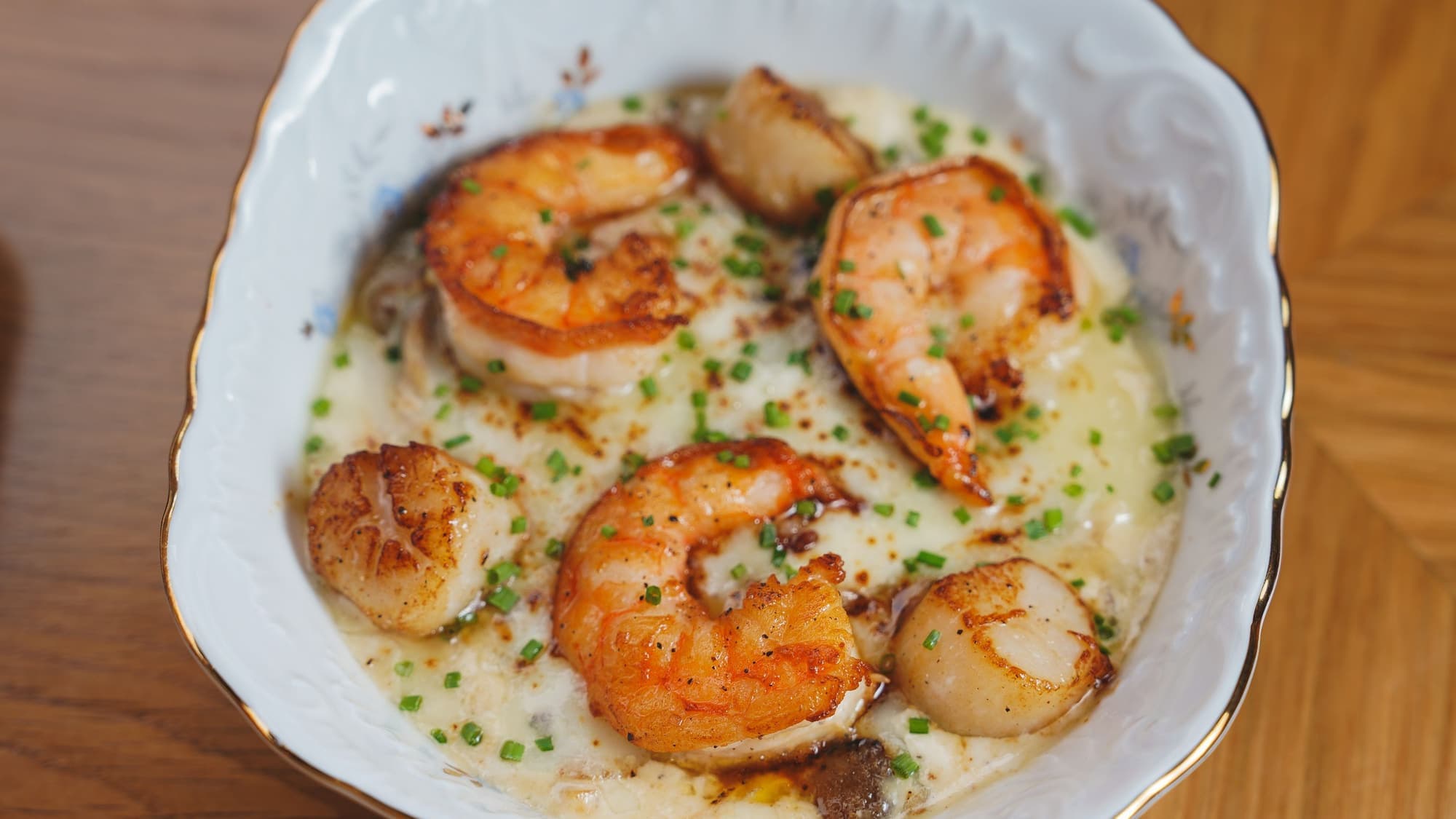
I need to make a confession before we get into the history here, because I think a lot of transplants are secretly carrying the same one. For most of my life, I refused to try shrimp and grits. Not because I'd tasted it and disliked it. Because I'd never tasted it at all, and I had it filed away, with total confidence, in the same mental category as oatmeal and farina. Mushy. Beige. A texture problem waiting to happen. I genuinely thought grits were just Southern oatmeal wearing a different name, and I wanted absolutely nothing to do with it.
It took embarrassingly long for someone to finally explain that I had this completely wrong. And the real story of this dish turned out to be so much better than the one I'd made up in my head.
What Grits Are, for Anyone Else Operating on My Same Bad Assumption
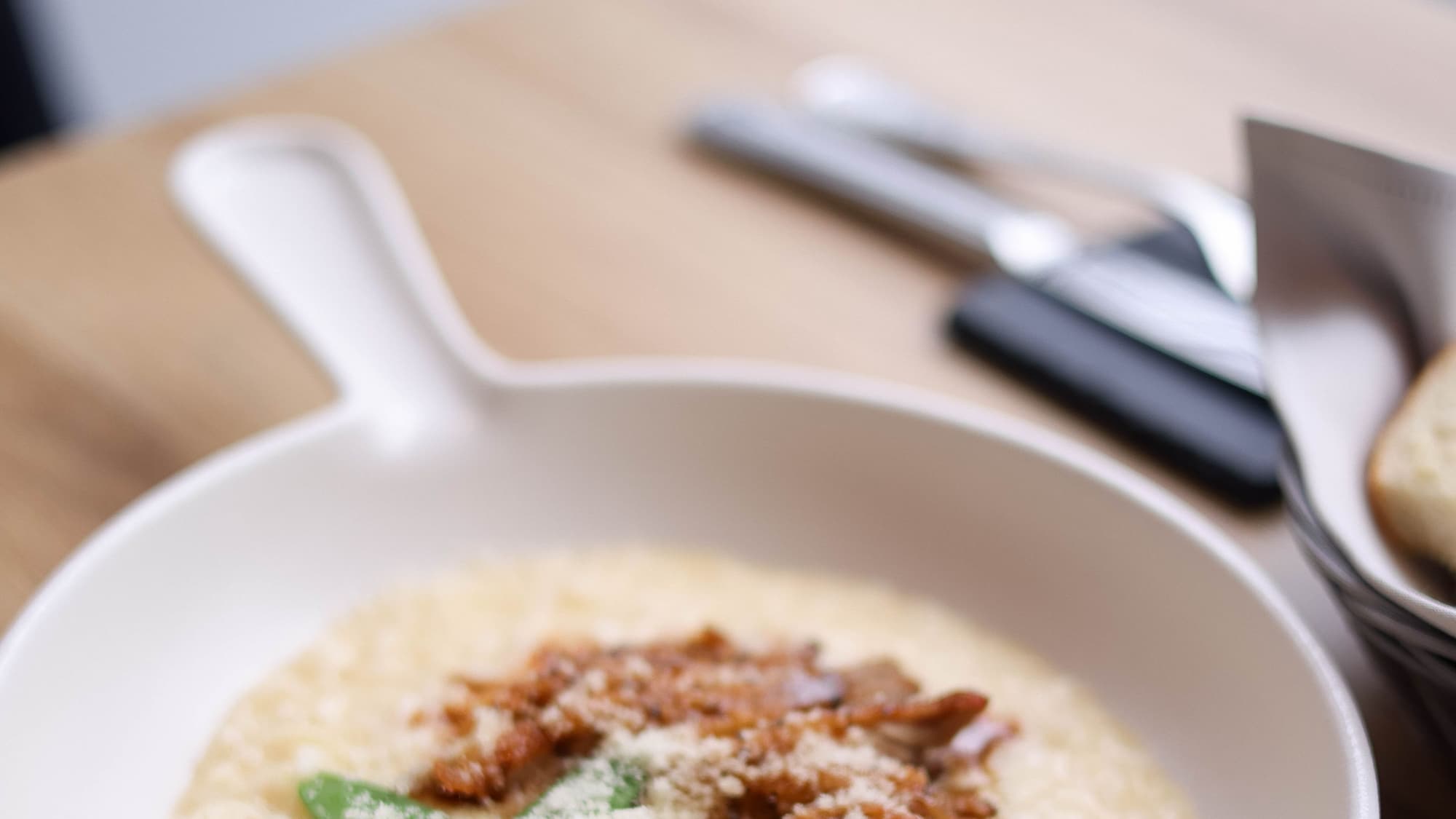
Grits are ground corn, cooked low and slow in liquid until they turn creamy. When they're made well, with real stone-ground corn and a generous amount of butter or cream stirred in, the texture is closer to a rich, savory risotto than to a bowl of plain oatmeal. Good grits have body and a little bit of texture, and they carry butter, cheese or a good sauce beautifully, which is exactly why they work so well underneath shrimp.
| What I thought grits were | What grits actually are |
|---|---|
| Southern oatmeal | Ground corn |
| Sweet, with brown sugar | Savory, with butter, cheese or gravy |
| Mushy and beige | Creamy, with body and a little texture |
| A breakfast punishment | The best part of the plate |
The Real History, and It Deserves to Be Told Properly
Shrimp and grits isn't something a restaurant stumbled into. Its roots are in the South Carolina Lowcountry, in the kitchens of enslaved people, and in the culture of the Gullah Geechee people, the descendants of West and Central Africans who were enslaved on the rice, indigo and Sea Island cotton plantations of our coast. Ground corn cooked into porridge, paired with the small, sweet shrimp that were plentiful in the creeks, became a practical, filling meal that echoed dishes from West African kitchens. (I wrote about the Gullah language, too, in my post on Southern accents.)
For a long time, it wasn't even called "shrimp and grits" here. In Lowcountry homes it was often known simply as breakfast shrimp, a humble home-kitchen dish that rarely showed up on restaurant menus at all.
Before it was a restaurant star, it was simply breakfast shrimp.
How It Went From a Local Secret to a National Dish
That changed in the 1980s. Chef Bill Neal was cooking his version at Crook's Corner, a restaurant in Chapel Hill, North Carolina, and in 1985 the New York Times food writer Craig Claiborne published his recipe. The dish took off from there, spreading across the South by the mid-1990s and landing on fine-dining menus as a dinner entree instead of a breakfast.
When to Eat It Like a Local
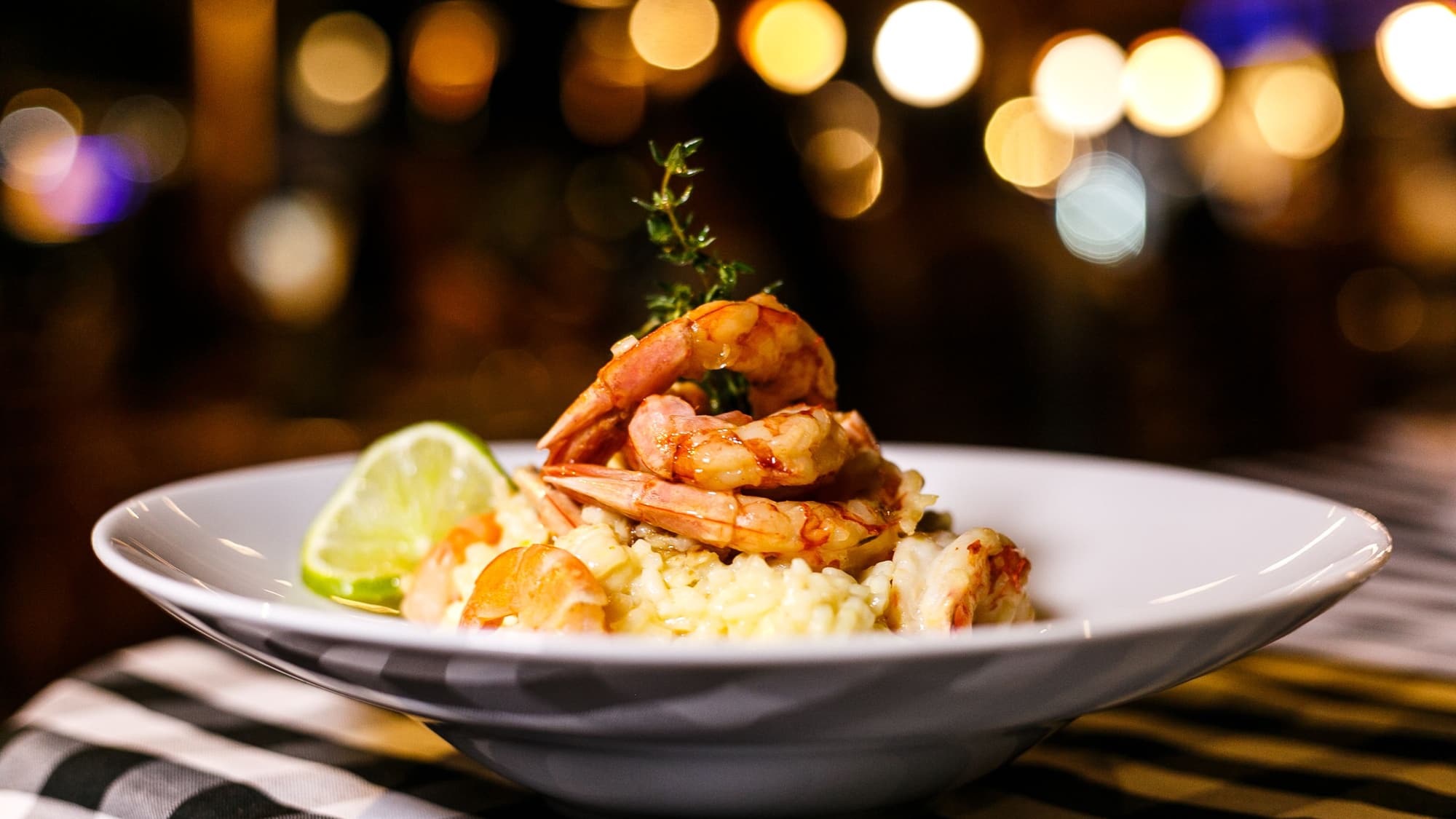
Here's something I love knowing now: South Carolina's shrimp come in waves. According to SCDNR, our shrimpers traditionally see big spring white shrimp, a summer run of brown shrimp, and then a second crop of white shrimp in the fall and into winter. So whenever you order it, ask if the shrimp are local. On this coast, they very often can be.
If you want to try a proper version, Charleston is still considered the dish's spiritual home, and it's an easy excuse for a day trip. But you'll find no shortage of spots right here on the Grand Strand putting their own spin on it too, some sticking close to butter and a simple pan gravy, others adding sausage, tomatoes or a little Cajun kick.
Is It Hard to Make at Home?
From what I hear from people who actually cook, not particularly, which surprised me given how rich it tastes. Good stone-ground grits, cooked low and slow rather than the instant kind, are the real foundation. The shrimp themselves cook in just a few minutes, so most of the effort goes into the grits and whatever sauce you build around them. I haven't attempted it myself yet, but several people whose cooking I trust have told me it's a genuinely approachable weeknight dish once you've got decent grits in the pantry.
My Advice to Any Fellow Shrimp-and-Grits Skeptics
If you've been avoiding this dish because your brain filed it under "oatmeal, but seafood," do yourself a favor and let that assumption go. It is not that. It's rich, it's savory, it has real history behind it, and it might be one of the best arguments for actually trying the food a new place is known for instead of assuming you already know what it is. (And if you're easing in, a seafood buffet is a very forgiving place to start.)
Thinking about making the move to the Grand Strand?
Whether you're relocating from up north or planning your retirement on the South Carolina coast, I'd love to help you get there. Follow me on Facebook for more local tips, search Grand Strand listings right here on my site, and join one of my Facebook groups built specifically for people making this move: