Little River
About Little River
Fishing-village roots on the northern Strand with waterfront dining and boating.
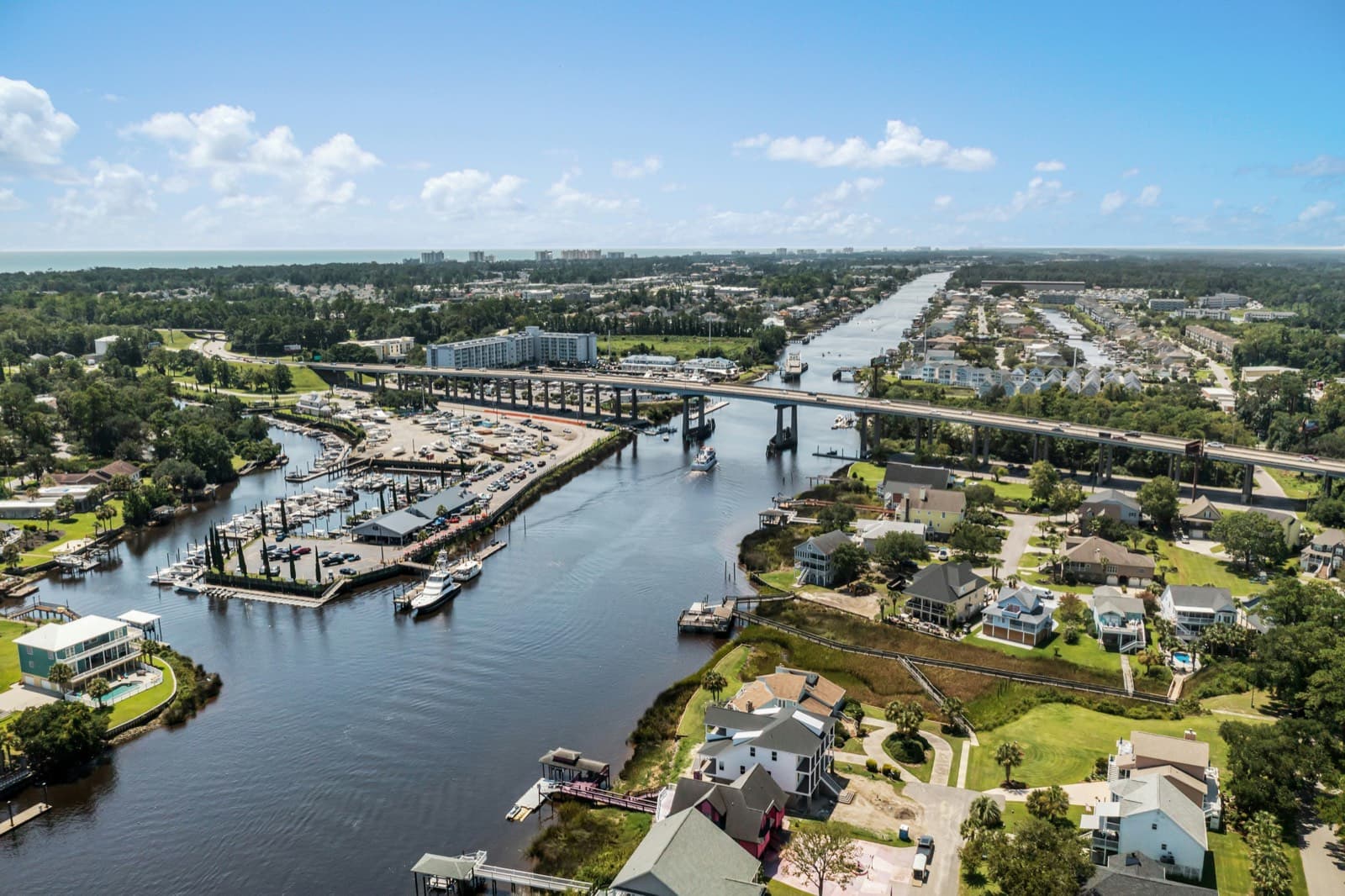
Little River sits at the northern tip of the Grand Strand, right at the North Carolina line, with real fishing-village roots that still show in its working waterfront — marinas, seafood restaurants, and charter boats line the harbor rather than a boardwalk district. It tends to offer more house for the money than the beachfront communities to its south, since it isn't itself an oceanfront town. It's a good fit for boaters and buyers prioritizing value and water access over beach proximity, especially those who don't mind a short drive to the sand in exchange for more space.
Life in Little River
Working Waterfront
Marinas, seafood restaurants, and charter boats rather than a boardwalk scene
Value
More house for the money than the oceanfront towns to the south
Space & Water Access
A short drive to the beach in exchange for more space
What Little River offers
- Marinas and charter docks on the harbor
- More house for the money than the oceanfront towns
- Space, at the cost of a drive to the sand
Around Little River
Little River is the last of the Grand Strand before the North Carolina line. North Myrtle Beach is immediately south of it, and Myrtle Beach proper is a longer run down the coast — which is most of why the same money buys more here.
That value is usually the reason buyers look this far north, so two guides earn their place: Best Places to Live on the Grand Strand, for how the northern end reads against the beachfront towns, and the investment-property guide if the plan involves renting it out — short-term rental rules are set municipality by municipality here, not county-wide. Current listings are in the Little River search.
Search homes for sale in Little River
Loading live MLS listings…
Questions about Little River
Short answers, with the full explanation one click away. General information, not legal, tax or insurance advice — South Carolina requires a licensed attorney to conduct your closing.
Is a home in Little River inside South Carolina's coastal area for wind insurance?
The test is statutory: § 38-75-310(5) draws Horry County's coastal area as everything east of US 17 or Bypass 17, whichever runs farther west — and by this end of the Strand the Bypass has rejoined US 17. Little River straddles the line: the waterfront side is east and inside, where wind and hail can legally be excluded from a homeowners policy and bought separately, and much of the rest is west and outside, where wind stays inside the homeowners policy. A specific address can sit on the far side of that road from the rest of its street, so the declarations page and your insurance agent settle it — not the town name. How wind and hail coverage works here →
Will I need flood insurance on a home in Little River?
That is a per-parcel question, not a per-town one — zones change block to block and sometimes lot to lot. What decides it is the FEMA flood zone for the specific parcel: inside a Special Flood Hazard Area (the A and V zones) federal law directs a regulated lender not to make, increase, extend or renew the loan unless the building is covered for the term of it. Zone X carries no federal mandate, though a lender may still require coverage as a matter of its own policy. Pull the zone for the actual address before you write an offer, never a neighborhood-level impression. Flood zones, decoded →
How is property tax figured on a home in Little River?
South Carolina assesses an owner-occupied legal residence at 4% and everything else — second homes, rentals, land — at 6%, under S.C. Code § 12-43-220. Those ratios are state law, so they apply the same in Horry and Georgetown counties. The 4% is not automatic: you have to apply for it, and the Horry County Assessor's guidance is blunt about the consequence of not doing so — an automatic 6% assessment. The rest of the bill depends on the taxing districts the parcel sits in, so ask the county assessor for the real figure on the real address before you rely on any of it. Horry County property taxes, explained →
What should I check on the HOA before buying in Little River?
The recorded set is the real set. Under South Carolina's Homeowners Association Act, a community's governing documents must be recorded to be enforceable, and its rules and amendments must be re-recorded by January tenth of each year following adoption to stay enforceable. Pull the recorded documents from the county Register of Deeds and compare them against the packet you were handed. If a rule that would change your purchase — a rental restriction, a vehicle rule, an architectural standard — is in the packet but not in the county record, that is a question for your closing attorney before you close. Buying in an HOA here →
Thinking about Little River?
Robin lives and works the Grand Strand every week — ask her what the listings don't tell you.