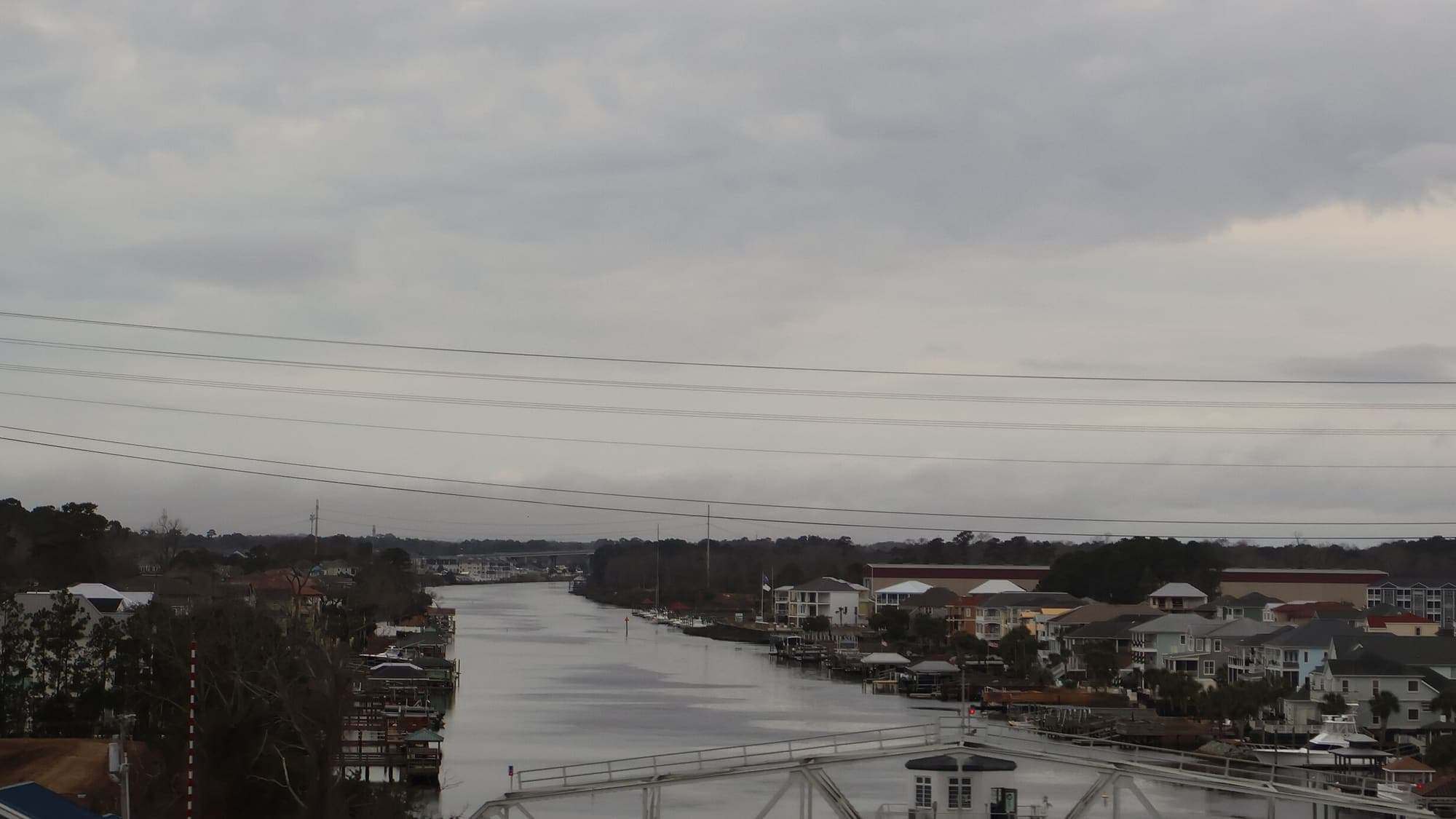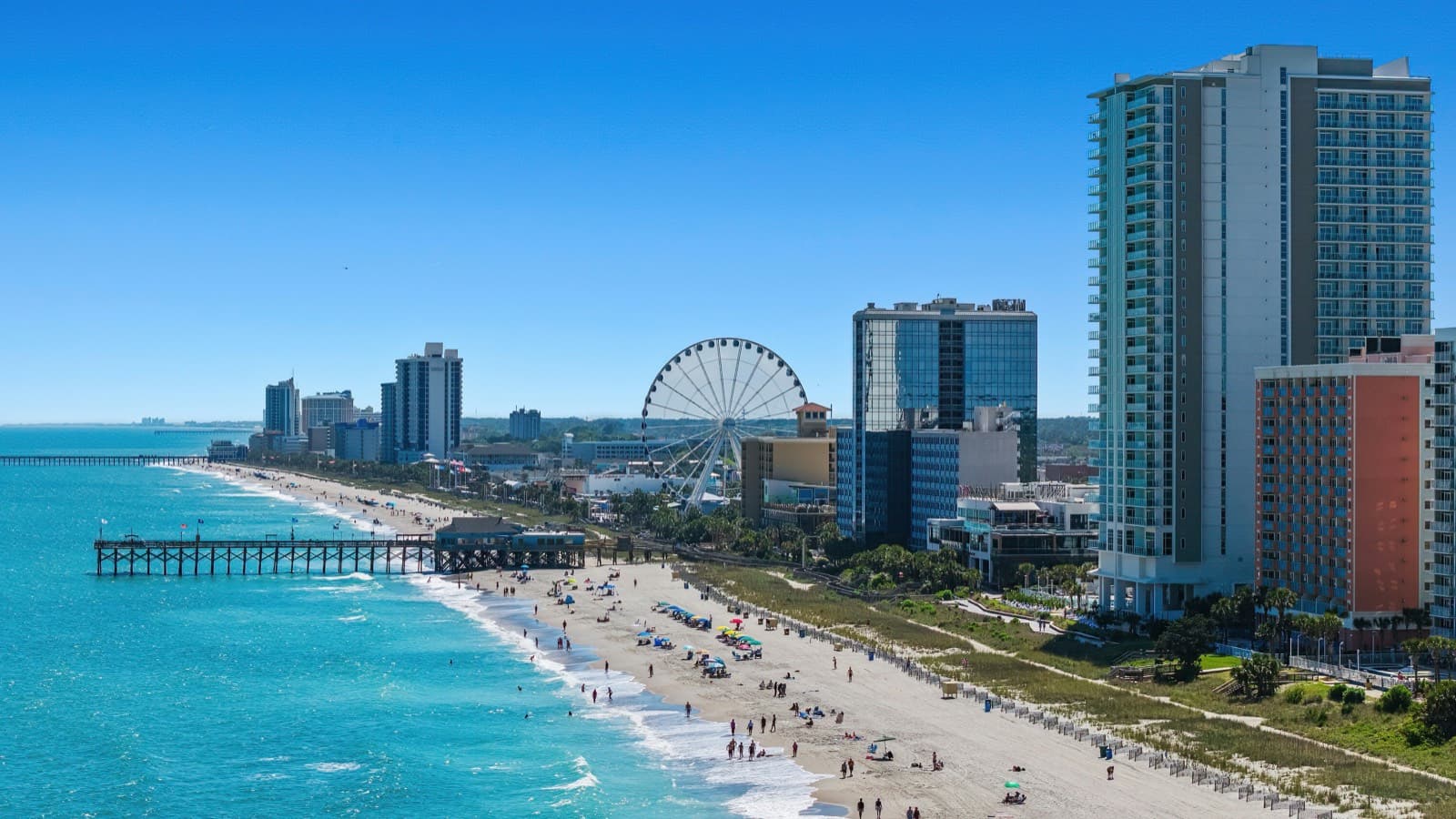
"Where should I actually live?" is usually the first real question once someone's decided the Grand Strand is the right region — and it's a harder question than it sounds, because "Myrtle Beach" gets used as shorthand for a 60-mile stretch of coastline that includes a walkable urban village, a historic barrier island, a fishing village, and a college town, all with genuinely different daily life. This guide walks through the real communities I show buyers, honestly, so you can narrow your search before you start touring homes.
This isn't a buying-process guide or a relocation checklist — I cover those separately in my guide to buying a home in Myrtle Beach and my relocation guide. This one is just about picking the right place.
The Grand Strand at a Glance
| Area | County | Character | Best For |
|---|---|---|---|
| Myrtle Beach | Horry | The lively center of it all — boardwalk, high-rise condos, tourism energy | Condo buyers, investors, anyone who wants to be in the middle of everything |
| North Myrtle Beach | Horry | Several distinct beach towns strung together, quieter than Myrtle Beach proper | Families, retirees, buyers who want beach access without the boardwalk crowds |
| The Market Common | Horry | Walkable, mixed-use urban village built where the Air Force base used to be | Buyers who want to walk to dinner, downsizers, low-maintenance living |
| Grande Dunes | Horry | Gated, master-planned, golf-and-marina | Golfers, boaters, higher-budget buyers wanting resort-style amenities |
| Surfside Beach | Horry | Small, quiet, self-branded "The Family Beach" | Families, buyers who want a small-town feel a short walk from sand |
| Murrells Inlet | Horry / Georgetown | Fishing-village character, marsh creeks, known for its MarshWalk | Retirees, boaters, buyers who want water views without high-rise density |
| Pawleys Island | Georgetown | Historic barrier island, understated, no high-rises | Buyers prioritizing quiet and history over nightlife and amenities |
| Little River | Horry | Fishing-village roots at the northern tip of the Strand | Boaters, buyers wanting more house for the money near the water |
| Carolina Forest | Horry | Master-planned neighborhoods across the Waterway off US 501, mostly built since the mid-1990s | Buyers wanting a newer home on a planned street, a short drive from the beach |
| Conway | Horry | Historic inland river town, home to Coastal Carolina University | Buyers wanting more land/lower prices and a slower pace than the coast |
That's a starting orientation, not the whole story — here's each one in more depth.
Myrtle Beach
Myrtle Beach proper is the center of gravity for the whole Grand Strand — the boardwalk, the highest concentration of oceanfront high-rises, and the widest range of condo and resort-style inventory anywhere in the area. The city has grown fast: its population went from 27,109 residents at the 2010 Census to 35,682 at the 2020 Census, a 31.6% increase in a single decade.
It suits buyers who want to be close to everything — restaurants, entertainment, the airport — and who are comfortable with a busier, more tourism-driven environment, especially in summer. It's also where most of the area's oceanfront condo and investment-property inventory is concentrated, which makes it the natural starting point for anyone thinking about rental income alongside personal use.
North Myrtle Beach
North Myrtle Beach isn't one beach town — it's four older towns (Cherry Grove, Ocean Drive, Crescent Beach, and Windy Hill) that merged into a single city in 1968, and that history still shows in how distinct each section feels. The city's own estimate puts its permanent population at around 22,000 residents, with that number swelling considerably during tourist season. It's also home to a genuine piece of South Carolina cultural history: the shag — South Carolina's official state dance — is said to have originated along the coast near Ocean Drive.
Compared to Myrtle Beach proper, North Myrtle Beach generally feels calmer and more residential, with a higher share of single-family homes alongside its oceanfront condo buildings. It's a common choice for retirees and families who want real beach access without the boardwalk-district intensity.
The Market Common
The Market Common has one of the more interesting backstories on the Strand: it's built on the former Myrtle Beach Air Force Base, which operated for decades before closing in 1993 and being redeveloped into a walkable, mixed-use neighborhood of shops, restaurants, parks, and homes.
It's the closest thing the Grand Strand has to true walkability — many residents can handle daily errands, dinner, and a walk in the park without getting in a car. That makes it a strong fit for buyers prioritizing low-maintenance living and anyone who specifically wants an urban-village feel rather than a typical suburban or beach-town layout.
Grande Dunes
Grande Dunes is a gated, master-planned community built around golf and water — an 18-hole golf course, a private ocean club, and a marina on the Intracoastal Waterway all sit inside the community. It represents the higher end of the Myrtle Beach market, with real estate ranging from golf-course homes to waterfront estates and marina-view condos.
It's a natural fit for buyers who want resort-style amenities as part of daily life rather than something they drive to — golfers, boaters, and buyers with the budget to prioritize a country-club lifestyle over walkable density or a historic small-town feel.
Surfside Beach
Surfside Beach brands itself, officially, as "The Family Beach" — a small, quiet town with a genuinely different pace than Myrtle Beach proper just a few minutes north. It's a compact town where a large share of homes sit within an easy walk or golf-cart ride of the beach.
It suits families and buyers who want a small-town, low-key beach-town feel — quieter streets, a strong sense of community identity, and beach access without the density or nightlife of the bigger tourist corridor. It's also my home base — my office is right in town on Surfside Drive.
Murrells Inlet
Murrells Inlet straddles the Horry-Georgetown county line and is best known for its MarshWalk — a boardwalk lined with waterfront seafood restaurants along the saltwater creek — and for its long history as a fishing and shrimping community, which is why it's widely known as the "Seafood Capital of South Carolina." Much of the housing here centers on the marsh and creek system rather than the open ocean, so views and boat access tend to matter more than direct oceanfront.
It's a strong fit for retirees and buyers who want a quieter, more nature-oriented setting with real water access, without needing a high-rise condo to get it.
Pawleys Island
Pawleys Island, in Georgetown County, is one of the oldest and most understated beach communities on the East Coast — a barrier island of historic beach cottages with no high-rises and a long-standing local reputation for being, as locals put it, "arrogantly shabby": proudly unpolished rather than resort-glossy.
It suits buyers who are specifically looking for quiet and history over nightlife, shopping, and amenities close at hand — a deliberate trade-off, not an oversight. If you want a lively boardwalk scene, this isn't your area; if you want a historic, low-key barrier island, it's hard to beat.
Little River
Little River sits at the northern tip of the Grand Strand, near the North Carolina line, and — like Murrells Inlet — has real fishing-village roots, with waterfront dining and boating built around its harbor. It tends to offer more house for the money than the beachfront communities to its south, since it isn't itself an oceanfront town.
It's a good fit for boaters and buyers prioritizing value and water access over beach proximity, especially those who don't mind a short drive to the sand in exchange for more space.
Carolina Forest
Carolina Forest isn't a town — it's an unincorporated, master-planned area of Horry County on the far side of the Intracoastal Waterway from Myrtle Beach, between US 501 and International Drive, roughly halfway to Conway. International Paper planned it on its own former timberland in the 1990s, and it has been filling in ever since. Almost everything here was built in the last thirty years: neighborhood after neighborhood of newer single-family homes, townhomes and condos set around ponds and sidewalks, with its own elementary, middle and high schools, a county recreation center and a library branch along Carolina Forest Boulevard.
It suits buyers who want a newer house on a planned street, would rather be off the tourist strip, and are fine with the beach being a drive down 501 rather than a walk. It's a driving community — errands are on the Boulevard and River Oaks Drive — so it's the wrong pick if walkability is the point; that's The Market Common.
Conway
Conway is the outlier on this list in a good way: a historic inland river town on the Waccamaw River, with a walkable historic downtown, mature oak trees, and a noticeably slower pace than the coastal towns. It's also a college town — Coastal Carolina University's main campus, with 12,000+ students, is based here, which adds a younger, year-round population and amenities you don't find in the smaller beach towns.
It suits buyers who want more land and lower prices than coastal communities typically offer, are comfortable with a short drive to the beach rather than walking distance, and like the idea of a real, historic Southern town rather than a beach-resort environment.
How to Actually Narrow It Down
A few questions that tend to sort buyers into the right area fast:
- Do you want to walk to dinner, or drive? Market Common and Conway's historic downtown are the walkable options; most of the rest of the Strand is more car-dependent.
- Is golf or boating a daily-life priority, or an occasional one? If it's daily, Grande Dunes (golf and marina) or the waterway-adjacent towns (Murrells Inlet, Little River) are worth prioritizing over general beach proximity.
- Do you want quiet, or activity? Pawleys Island and Surfside Beach lean quiet; Myrtle Beach proper leans lively, especially in season.
- Is this a primary home, a part-time second home, or an investment? Oceanfront condo inventory (concentrated in Myrtle Beach and North Myrtle Beach) tends to make the most sense for rental income; Conway and Little River tend to offer more space per dollar for full-time living.
- Retiring, and is South Carolina's tax treatment part of your decision? Worth knowing regardless of area: South Carolina doesn't tax Social Security income at all, and residents 65 and older get an additional state income tax deduction on other retirement income. As a Senior Real Estate Specialist (SRES®), this is a conversation I have often — happy to talk through how it factors into your specific plan.
None of these areas is objectively "best" — they suit genuinely different lives, which is the whole point of comparing them honestly instead of picking a favorite.
Frequently Asked Questions
What's the difference between Myrtle Beach and North Myrtle Beach? They're separate cities. Myrtle Beach proper is the busier, boardwalk-centered core with the widest range of condo and resort inventory; North Myrtle Beach — actually four merged beach towns — is generally quieter and more residential, with a higher share of single-family homes.
Which area has the most walkable lifestyle? The Market Common, by a clear margin — it was purpose-built as a walkable, mixed-use neighborhood. Conway's historic downtown is the other genuinely walkable option, in an inland, small-town setting rather than a beach one.
Where should I look if I want golf as part of daily life? Grande Dunes is built specifically around its golf course and marina. Several other communities across the Strand also center on golf — that's broad enough to deserve its own dedicated comparison, which is coming as a future article.
Is Pawleys Island or Murrells Inlet quieter? Both are quieter than Myrtle Beach proper, but in different ways — Pawleys Island is a historic barrier island with no high-rises at all, while Murrells Inlet centers on marsh-creek and MarshWalk-adjacent living with a working fishing-village history.
Which area is best for retirees? It depends on what you want day to day — North Myrtle Beach, Surfside Beach, and Murrells Inlet are all common choices for a quieter, slower-paced retirement, while Grande Dunes suits retirees who specifically want golf and marina access. I work with retirees across all of these regularly as a Senior Real Estate Specialist (SRES®) and can talk through what actually fits your situation.
Ready to See These Areas for Yourself?
Descriptions only go so far — the best way to know which of these fits you is to actually walk them. Browse current listings across the Grand Strand to get a feel for what's available in each area, or reach out directly and I'll help you build a shortlist based on how you actually want to live, not just where the postcard photos are prettiest.
Thinking about making the move to the Grand Strand?
Whether you're relocating from up north or planning your retirement on the South Carolina coast, I'd love to help you get there. Follow me on Facebook for more local tips, search Grand Strand listings right here on my site, and join one of my Facebook groups built specifically for people making this move: