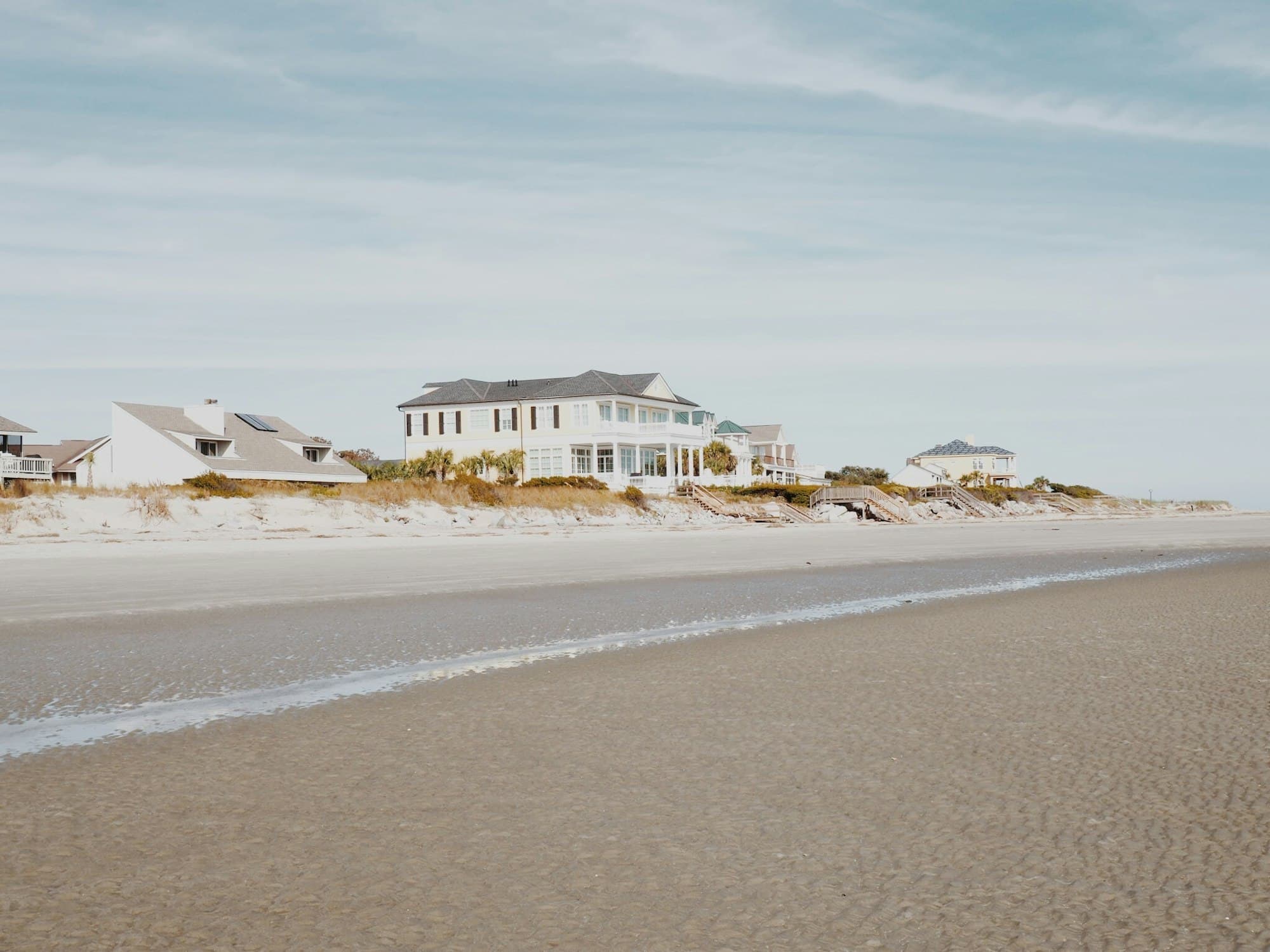
Myrtle Beach real estate works a little differently than the market you're probably used to. Between South Carolina's attorney-closing process, how the state actually calculates property taxes, and the realities of buying near the coast — flood zones, wind insurance, HOA-run buildings — there's a lot a generic national buying guide leaves out. I've walked buyers through this from up and down the East Coast: people relocating full-time, people buying a second home, first-timers buying their very first house anywhere. This is what I make sure every one of them understands before we start touring homes.
The short version: get pre-approved before you fall in love with anything, line up an agent and a closing attorney (South Carolina requires one by law — more on that below), figure out which stretch of the Grand Strand actually fits how you'll live, and budget for taxes and insurance the way South Carolina actually calculates them rather than the way your home state does. The rest of this guide walks through each step in order.
Why Buyers Are Choosing Myrtle Beach
Myrtle Beach isn't a quiet secret anymore. The city's population grew from 27,109 residents in the 2010 Census to 35,682 in the 2020 Census — a 31.6% jump in a single decade. That growth shows up in traffic, in new construction, and in how quickly well-priced homes move in season.
A few things keep drawing buyers here specifically:
- Year-round coastal living, not just a vacation week — beaches, golf, the Intracoastal Waterway, and a lower overall cost of living than most East Coast beach markets.
- No state income tax on Social Security. South Carolina fully exempts Social Security benefits from state income tax, and retirees also get an additional deduction of up to $15,000 per person ($30,000 for a married couple) once both spouses are 65 or older. If you're weighing Myrtle Beach against another state for retirement, this is worth running past your accountant early.
- A genuinely wide range of housing stock — oceanfront high-rises, golf course communities, new construction inland, historic riverfront towns like Conway — which is part of why "where should I buy" deserves its own real answer (see the neighborhoods section below).
None of that means the process is simple, though — coastal markets have their own rules, and skipping past them is how buyers end up with an unpleasant surprise the week before closing.
Step 1: Get Your Financing in Order First
Before you look at a single listing, talk to a lender. A pre-approval letter (not just a pre-qualification) tells you a real number to shop with and makes your offer competitive once you find a home you want. Run your own numbers first with our mortgage calculator so you walk into that conversation knowing roughly what a given price point costs monthly.
If this is your first home, ask your lender specifically about South Carolina Housing (SC Housing) programs. SC Housing, the state's housing finance agency, runs the SC Housing Homebuyer Program — a fixed-rate mortgage paired with optional forgivable down payment assistance for eligible first-time and low-to-moderate-income buyers — and Palmetto Home Advantage, which is open to first-time, move-up, and repeat buyers statewide with no sales price cap (income limits and terms apply and change, so confirm current numbers with a participating lender or at schousing.sc.gov). SC Housing also periodically runs targeted programs for teachers, nurses, first responders, and veterans, so it's worth asking what's currently open even if you don't think you'd otherwise qualify.
A full breakdown of first-time buyer programs and how to know what you can actually afford here deserves its own article — both are coming soon.
Step 2: Build Your Team — Agent + Closing Attorney
South Carolina is different from a lot of the country in one important way: you're legally required to have a licensed attorney conduct your real estate closing. This isn't a local custom — the South Carolina Supreme Court has ruled that closings must be conducted under attorney supervision, and the South Carolina Bar's ethics guidance treats it as the unauthorized practice of law otherwise. In practice, this is a good thing for buyers: someone with actual legal authority is reviewing your title and your closing documents, not just a title company processing paperwork.
Your real estate agent should be licensed through the South Carolina Real Estate Commission — you can verify any agent's license status through the Commission's public lookup if you ever want to double-check. Your attorney is a separate hire, and in most transactions here either you or your agent will recommend one; you're free to choose your own.
Step 3: Figure Out Where You Actually Want to Live
"Myrtle Beach" gets used as shorthand for the whole Grand Strand, but the area covers a lot of very different ground — a golf-course community in Carolina Forest lives nothing like an oceanfront condo tower on the boardwalk, and both are a world away from a historic riverfront home in Conway. A few starting points:
- Myrtle Beach proper — the boardwalk, the Boardwalk & Promenade energy, and the widest range of condo and resort-style inventory.
- North Myrtle Beach — quieter beach towns (Cherry Grove, Ocean Drive, Windy Hill) with more single-family homes and a slower pace.
- The Market Common — a walkable, mixed-use neighborhood with shops and restaurants built in, popular with buyers who don't want to drive everywhere.
- Grande Dunes — a gated, golf-and-marina community on the higher end of the market.
- Carolina Forest — master-planned neighborhoods across the Waterway off US 501, mostly built since the mid-1990s, with their own schools and a short drive to the beach.
- Surfside Beach — markets itself as "The Family Beach," generally quieter than Myrtle Beach proper.
- Murrells Inlet and Pawleys Island — historic, marsh-and-creek character to the south, less high-rise development.
- Little River and Conway — more inland or waterway-adjacent, generally more house for the dollar than beachfront areas.
Browse our full neighborhood guides or search active listings directly once you have a sense of what fits. A dedicated "which Myrtle Beach neighborhood is right for you" comparison is on the way — for now, the fastest path is walking a few of these with an agent who knows them block by block.
Step 4: Budget for the Costs That Are Specific to South Carolina and the Coast
This is the section that trips up buyers moving from inland states the most. None of these are optional line items — plan for them before you write an offer, not after.
Property Taxes
South Carolina taxes owner-occupied primary residences very differently from every other type of property, and the difference is large:
- Owner-occupied primary residence ("legal residence"): assessed at 4% of fair market value.
- Second home, investment property, or any other real property: assessed at 6% of fair market value.
Your actual tax bill is fair market value × assessment ratio × the local millage rate, and millage varies by exact location (county, school district, fire district, and municipality all layer in). In Horry County, the 4% legal residence rate isn't automatic — you have to apply for it through the Horry County Assessor's Office, and there's an annual filing deadline that has shifted between years, so confirm the current deadline directly with the Assessor's Office before or right after closing. If you're buying a second home or an investment property, plan on the 6% rate and don't assume you'll qualify for 4% just because you own it.
For the full breakdown — how the bill is actually calculated, the school operating credit that makes 4% worth more than it looks, what happens to your assessment the year you buy, and how to apply for legal residence — see Myrtle Beach property taxes: what homeowners need to know.
Closing Costs
Nationally, the federal Consumer Financial Protection Bureau puts typical closing costs at 2% to 5% of the home purchase price, not including your down payment — that's a national rule of thumb, not a South Carolina-specific figure, and the CFPB is explicit that your actual number depends on your loan type, lender fees, and location. Once you're under contract, your lender is legally required to send you a Loan Estimate, and later a Closing Disclosure, that itemizes your real costs line by line — treat that document, not a percentage rule of thumb, as what you actually budget against.
One cost that is fixed by South Carolina state law regardless of lender: the deed recording fee (effectively the state's real estate transfer tax) is $1.85 per $500 of the property's value — by long-standing custom in South Carolina, this fee is typically paid by the seller, not the buyer, though everything in a contract is negotiable.
Flood Zones and Flood Insurance
A lot of Myrtle Beach sits inside FEMA's mapped 100-year floodplain (technically, an area with a 1% annual chance of flooding), and flood risk here comes from both storm surge and heavy inland rainfall overwhelming drainage — not just hurricanes making direct landfall. A few things every buyer should know before writing an offer:
- Flooding is not covered by a standard homeowners policy. You need separate flood insurance, typically through the National Flood Insurance Program (NFIP), and building coverage through NFIP tops out at $250,000.
- The City of Myrtle Beach participates in FEMA's Community Rating System (CRS), currently rated Class 5, which gets residents a meaningful discount on NFIP flood premiums compared to a non-participating community.
- New residential construction in the city must be elevated at least 3 feet above base flood elevation.
- You can look up a specific property's flood zone through Horry County's online GIS floodplain maps or the FEMA Flood Map Service Center — do this for any specific address you're seriously considering, not just the general area, since flood zones can change block to block.
For the zone-by-zone version — what the letters actually mean, when your lender is legally required to make you carry coverage, what an elevation certificate tells you, and how to challenge a map you think is wrong — see understanding flood zones when buying a home in Myrtle Beach.
Wind and Hail Insurance
Coastal South Carolina, including Horry County, has its own residual insurance market for wind and hail coverage: the South Carolina Wind and Hail Underwriting Association, created by state law to provide wind and hail coverage to coastal property owners who can't get it through a standard insurer. Whether you'll need to use it depends on your specific insurer and property — but if a standard carrier won't write wind coverage on a home you're considering, this is where that coverage typically comes from, and it's worth asking your insurance agent about early in the process rather than during your due diligence period.
HOA and Condo Fees
If you're buying a condo, a home in a gated community, or anything with a homeowners association, get the HOA's financials, rules, and fee history before your inspection contingency expires — not just the current monthly fee. Ask specifically about the reserve fund balance and any planned special assessments; a low monthly fee attached to an underfunded reserve fund can turn into a large one-time bill. My condo buying guide covers HOA dues, master versus unit insurance, reserve studies, and rental restrictions in depth.
Step 5: Make an Offer and Go Under Contract
Once you've found the home, your agent will help you structure an offer using the South Carolina standard contract forms, which include your standard contingencies — financing, inspection, appraisal — along with due-diligence deadlines specific to South Carolina practice. Your closing attorney typically gets involved shortly after you're under contract to begin the title search, not just at the closing table.
Step 6: Inspections
A general home inspection is worth doing on every purchase, but in a coastal market pay particular attention to:
- Roof condition and age (wind exposure accelerates wear)
- Moisture intrusion, humidity damage, and mold in crawl spaces or attics
- HVAC condition (coastal humidity is hard on systems)
- Any signs of prior flood damage, even outside a mapped flood zone
If you're buying an older home or anything near the water, ask your inspector directly whether a separate wind mitigation inspection makes sense — it can also lower your insurance premium.
Step 7: Closing Day in South Carolina
Because South Carolina requires an attorney to conduct the closing, your closing happens at (or through) your attorney's office rather than a title company. Bring government-issued photo ID and any funds due at closing in the form your attorney specifies (typically a wire, not a personal check). Your attorney will walk you through the settlement statement, the deed, and your loan documents, and will handle recording the deed with the county afterward. My closing-day checklist covers exactly what to bring, the federal three-business-day rule that sets your closing date, and how to move your funds safely.
Most conventional purchases close 30–45 days after a signed contract; cash purchases can move faster. Confirm your specific timeline with your lender and attorney once you're under contract.
Common Mistakes Out-of-State Buyers Make Here
- Assuming the 4% property tax rate applies automatically. It doesn't — you have to apply for legal residence status, and if you buy a second home, you're at 6% by default.
- Skipping flood insurance because the home isn't in a mapped high-risk zone. Flood zones get remapped, and a large share of flood claims nationally come from outside mapped high-risk areas.
- Not budgeting for HOA reserve health, especially in older condo buildings — the monthly fee is only part of the picture.
- Underestimating how differently the market moves in-season versus off-season. Inventory, competition, and pricing pressure can shift noticeably between summer tourist season and the quieter winter months.
Frequently Asked Questions
Do I need an attorney to buy a home in Myrtle Beach? Yes. South Carolina law requires a licensed attorney to conduct real estate closings statewide — this isn't optional and isn't unique to Myrtle Beach, it's how closings work everywhere in the state.
Is Myrtle Beach a good place for retirees to buy? It's a common draw for retirees in part because South Carolina doesn't tax Social Security income and offers additional deductions on other retirement income once you turn 65. Whether it's the right fit depends on your specific situation — as a Senior Real Estate Specialist (SRES®), this is a conversation I have often, and I'm glad to talk through it.
Will my property taxes really be that different if I buy a second home instead of a primary residence? Yes — a second home or investment property is assessed at 6% of fair market value versus 4% for an owner-occupied primary residence, which meaningfully changes your annual tax bill on an otherwise identical home. Run both scenarios before you decide how you'll use the property.
How do I find out if a specific house is in a flood zone? Look it up by address through Horry County's online GIS floodplain maps or the FEMA Flood Map Service Center. Don't rely on "the neighborhood generally isn't in a flood zone" — check the specific parcel.
How long does closing take in South Carolina? Most financed purchases close in roughly 30 to 45 days from a signed contract; cash deals can be faster. Your lender and closing attorney will give you a firm date once you're under contract.
Ready to Start Looking?
This guide covers the parts of buying in Myrtle Beach that are easy to miss from out of state — but every one of these steps plays out a little differently depending on the specific home, neighborhood, and budget you're working with. Browse current listings to get a feel for what's out there, or reach out directly and I'll help you build a plan that actually fits your situation.
Thinking about making the move to the Grand Strand?
Whether you're relocating from up north or planning your retirement on the South Carolina coast, I'd love to help you get there. Follow me on Facebook for more local tips, search Grand Strand listings right here on my site, and join one of my Facebook groups built specifically for people making this move: