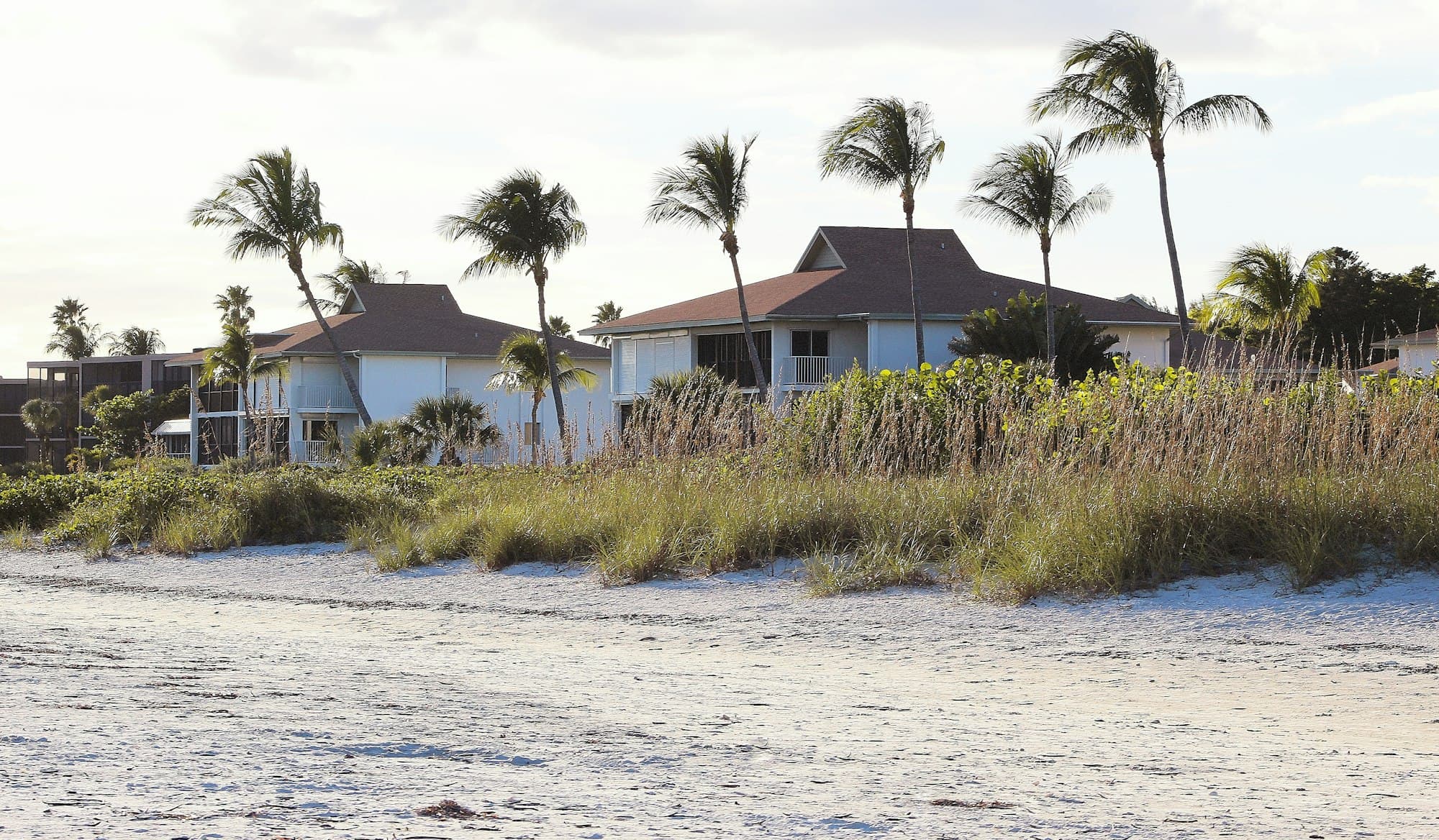
"How much does it cost to buy a home in Myrtle Beach?" is really four questions wearing one coat: how much cash do I need today, how much do I need at the table, how much of that is negotiable, and what does the house cost me every month afterward.
I'm not going to give you a median price. Prices move, they vary enormously between an inland Conway ranch and an oceanfront condo, and a number I typed in August is worth nothing to you in March. What doesn't move is the structure — which costs exist, which ones federal law lets a lender raise on you, and which ones South Carolina sets by statute. Learn the structure and you can price any specific house accurately with your lender in an afternoon.
For the transaction itself start to finish, see my complete guide to buying a home in Myrtle Beach.
Bucket 1: The Down Payment
The 20% figure is a myth that costs people years. The actual minimums are set by loan program:
| Loan type | Minimum down payment | Source |
|---|---|---|
| FHA | "As low as 3.5% of the purchase price" | HUD |
| VA | "No down payment as long as the sales price isn't higher than the home's appraised value" | VA |
| USDA Guaranteed | Structured to cover the full purchase — the loan may not exceed the lesser of appraised market value plus the up-front guarantee fee, or purchase price plus eligible acquisition costs | 7 CFR § 3555.103 |
| Conventional | Set by the lender and the specific loan program | Ask your lender for the exact program minimum in writing |
Lower down payments carry mortgage insurance in most cases — the VA is the exception, stating there's "no need for private mortgage insurance (PMI) or mortgage insurance premiums (MIP)" — and each program's insurance behaves differently in how long it lasts and whether it can be removed. That's a conversation to have with your lender before you decide, not after.
South Carolina also runs down payment assistance worth checking before you commit cash you didn't have to spend. My first-time buyer's guide covers the SC Housing program menu and the income and price limits that apply in Horry and Georgetown counties.
Bucket 2: What You Spend Before You Ever Get to Closing
This is the bucket buyers forget, and it's the one that comes out of pocket earliest.
| Spend | When | What decides it |
|---|---|---|
| Earnest money | At contract | Negotiated. There's no statutory amount in South Carolina — it's a contract term, and in a competitive situation it's leverage. It goes toward your purchase, but read the contract's terms on when it becomes non-refundable. |
| Home inspection | During due diligence | Set by the inspector and the size/type of property. On the coast, budget for the add-ons too — wind mitigation, HVAC, and in some cases a separate WDO (termite) inspection. |
| Appraisal | After you're under contract | Ordered by the lender; usually paid up front or at closing depending on the lender. |
| Insurance binders | Before closing | You have to have coverage in force at closing. On this coast that can mean a homeowners policy, a separate wind and hail policy, and a flood policy. |
| Survey, if you want one | During due diligence | Optional in many transactions, valuable when boundaries, easements, or encroachments are in question. |
Two of these are worth spending more on here than you would inland. A coastal inspection that finds corrosion, a failing roof deck, or a water-intrusion history has just paid for itself many times. And an insurance quote pulled during due diligence rather than after is the single best money-saving move available to a Grand Strand buyer — see wind insurance in coastal South Carolina and understanding flood zones.
Bucket 3: Closing Costs — and the Federal Rules That Cap Them
Here's the part almost nobody knows, and it's genuinely valuable.
Your lender must give you a Loan Estimate — under 12 CFR § 1026.19(e), delivered or mailed no later than the third business day after receiving your application. The CFPB publishes a line-by-line explainer worth reading alongside it.
That estimate isn't a friendly guess. Federal law sorts every cost on it into three tolerance buckets, and the bucket decides how much a number is allowed to grow between the Loan Estimate and your final Closing Disclosure:
| Tolerance bucket | How much it can increase | What's in it |
|---|---|---|
| Zero tolerance | It can't. § 1026.19(e)(3)(i): the estimate is in good faith only if "the charge paid by or imposed on the consumer does not exceed the amount originally disclosed" | The general rule — everything not carved out below, including the lender's own charges |
| 10% cumulative | The aggregate of these may exceed the disclosed aggregate by no more than 10 percent | Third-party services and recording fees — but only where the charge isn't paid to the creditor or its affiliate, and the creditor let you shop for that service |
| No limit | May exceed the estimate if consistent with "the best information reasonably available to the creditor at the time" | Prepaid interest; property insurance premiums; amounts placed into escrow, impound, or reserve accounts; charges paid to third-party providers you selected who weren't on the lender's list; and property taxes |
Read that third row again, because it's the coastal punchline: property insurance premiums and escrow deposits sit in the unlimited bucket. A lender's opening Loan Estimate on a Grand Strand property can carry an insurance figure that turns out to be materially low, and nothing in Regulation Z stops it from rising. This is precisely why I push buyers to get real quotes during due diligence instead of trusting the estimate line.
Two more provisions worth having in your pocket:
- Revisions have specific triggers. A lender may only substitute a revised estimate for the original under § 1026.19(e)(3)(iv) — a changed circumstance, a changed-circumstance eligibility issue, revisions you requested, interest-rate-dependent changes after a rate lock (with revised disclosures required no later than three business days after the lock), an expired offer, or a delayed settlement on a construction loan. "The market moved" isn't on that list.
- There's a refund remedy. Under § 1026.19(f)(2)(v), if the amounts you paid exceed the tolerance limits, the creditor complies by refunding the excess no later than 60 days after consummation and delivering corrected disclosures reflecting the refund in that same window. If your Closing Disclosure shows a zero-tolerance item higher than the Loan Estimate with no valid revision trigger, say so out loud at the table.
And the whole timing chain: you must receive the Closing Disclosure no later than three business days before consummation. What to bring to closing covers what resets that clock and the day-before inspection right almost nobody uses.
Bucket 4: The South Carolina Line Items
Some of your closing costs are set by South Carolina statute, not by your lender, and they're the same everywhere in the state.
The deed recording fee is South Carolina's real estate transfer tax. Per the SC Department of Revenue, it is $1.85 for each $500 of realty value, or fractional part of $500 — $1.30 state, $0.55 county (S.C. Code § 12-24-10(A)). On a $400,000 sale that's $1,480. By long-standing South Carolina custom this is typically a seller expense, though the contract governs; my selling guide covers that side.
Filing fees are flat charges set by S.C. Code § 8-21-310, collected here by the Horry County Register of Deeds:
| Document | Statutory filing fee |
|---|---|
| A deed to real estate | $15 |
| A mortgage | $25 |
| A real estate sales contract | $25 |
| A power of attorney | $25 |
| An easement agreement or other document affecting title or possession not otherwise listed | $25 |
| Restrictive covenants, bylaws, and their amendments | $25 |
| A mortgage satisfaction or release | $10 |
The power of attorney fee is waived for a deployed service member on presentation of a copy of deployment orders to a combat zone.
Note the mechanical consequence: buyers financing a purchase record a mortgage, so the $25 mortgage filing fee is a buyer-side line. Cash buyers don't have one.
Your closing attorney's fee is a real cost with no statewide schedule, and it isn't optional. South Carolina requires attorney supervision of closings — SC Bar Ethics Advisory Opinion 05-16 quotes State v. Buyers Service Co. that "real estate and mortgage loan closings should be conducted only under the supervision of attorneys," and In re Lester that a "licensed attorney should have been physically present to conduct the actual real estate transactions and closings." Ask for the fee in writing when you choose the firm, and ask what it includes — title search, title insurance, courier and recording handling are sometimes bundled and sometimes not.
Title insurance comes in two products: a lender's policy protecting the lender, and an owner's policy protecting you. They are not the same coverage. Ask what each costs and what each covers before closing week.
Bucket 5: The Cost That Never Stops
Closing is one day. The following four numbers are the ones that decide whether the house is actually affordable.
Property taxes hinge on a form you have to file. South Carolina taxes owner-occupied property at a 4% assessment ratio and everything else at 6%, and the 4% is an application, not a default. Do not budget from the seller's current tax bill — your purchase can reset the picture entirely. Myrtle Beach property taxes walks through exactly what happens the year you buy, and the 4% vs 6% ratio explains the gap.
Wind and hail may be its own policy with its own deductible. On the coast that's frequently a second premium and a second deductible, not a line inside your homeowners policy. See where the coastal line actually falls on the Grand Strand.
Flood insurance depends on the mapped zone, and in some zones your lender can't close without it. Why the zone decides what your lender can do.
HOA or regime dues are a fixed monthly obligation you can't refinance away — and in a condo regime, dues fund shared insurance and reserves whose adequacy is your problem too. What HOA dues actually pay for.
Put all four into my mortgage calculator alongside principal and interest. A payment modeled without them isn't a payment, it's a fantasy.
How to Get a Real Number for a Real House
The structure above becomes a dollar figure in about four steps:
- Get a Loan Estimate from at least two lenders on the same loan amount and the same day, and compare them section by section. That document exists to be compared.
- Ask which items on it are zero-tolerance and which are in the 10% bucket — and ask whether you're permitted to shop for the ones in the 10% bucket. You often are, and the answer changes what you pay.
- Replace the insurance line with a real quote for the actual address, wind and flood included. This is the number most likely to be wrong on a Grand Strand estimate.
- Ask the closing attorney's office for their fee sheet and the recording charges for your specific documents.
Do those four things and you'll know your cash to close within a rounding error — before you're emotionally committed to a house.
Frequently Asked Questions
What's a typical closing cost percentage in Myrtle Beach? I won't give you one, because the honest answer is that it depends on your loan type, your lender's fee structure, whether you're financing, and what your insurance costs at that specific address — and a percentage would hide all four. Your Loan Estimate is the real answer, and you can get one before you make an offer.
Who pays the deed recording fee, the buyer or the seller? By long-standing South Carolina custom it's typically a seller expense, but it's a contract term and it's negotiable. The SCDOR sets the rate; the contract sets who writes the check.
Can my closing costs go up after I get the Loan Estimate? Some can, some can't, and § 1026.19(e)(3) draws the lines. Lender charges are zero tolerance. Third-party services and recording fees can rise up to 10% in aggregate under conditions. Prepaid interest, property insurance premiums, escrow deposits, property taxes, and providers you chose off-list have no cap. If a zero-tolerance item rose without one of the specific triggers in § 1026.19(e)(3)(iv), there's a 60-day refund remedy in § 1026.19(f)(2)(v).
Do I need an attorney, and can I skip that cost? You need one, and no. South Carolina requires attorney supervision of real estate and mortgage loan closings. What you can do is choose the firm and ask for the fee in writing.
How much earnest money should I offer? There's no statutory amount — it's negotiated, and how much is persuasive depends on the property and the competition. What matters more than the number is understanding when it stops being refundable under your contract. Ask me before you sign.
Is buying a condo cheaper? The purchase price may be lower, but the cost structure is different, not simply smaller: regime dues, master insurance and deductibles, reserve health, and a financing approval that happens at the building level as well as the borrower level. Start with the condo guide.
Does a cash purchase avoid most of this? It avoids the lender's charges, the mortgage filing fee, mortgage insurance, and the Loan Estimate/Closing Disclosure machinery entirely. It does not avoid the deed recording fee, the deed filing fee, the attorney, title work, insurance, or property taxes — and skipping title insurance because you're paying cash is a decision to discuss with your attorney, not a saving.
Let's Price a Real Address
The most useful version of this article is the one where we run it on an actual house — with a real Loan Estimate, a real insurance quote, and the real tax ratio you'll qualify for.
Get in touch and we'll do that. My resources page has the lenders, closing attorneys, and inspectors I work with, and you can browse current listings whenever you're ready to pick an address to price.
One note specific to this topic: statutory fees are amended from time to time, and lender charges vary by lender and by loan. Confirm the current deed recording fee with the SCDOR, the filing fees with the Horry County Register of Deeds, and everything else against your own Loan Estimate.
Thinking about making the move to the Grand Strand?
Whether you're relocating from up north or planning your retirement on the South Carolina coast, I'd love to help you get there. Follow me on Facebook for more local tips, search Grand Strand listings right here on my site, and join one of my Facebook groups built specifically for people making this move: