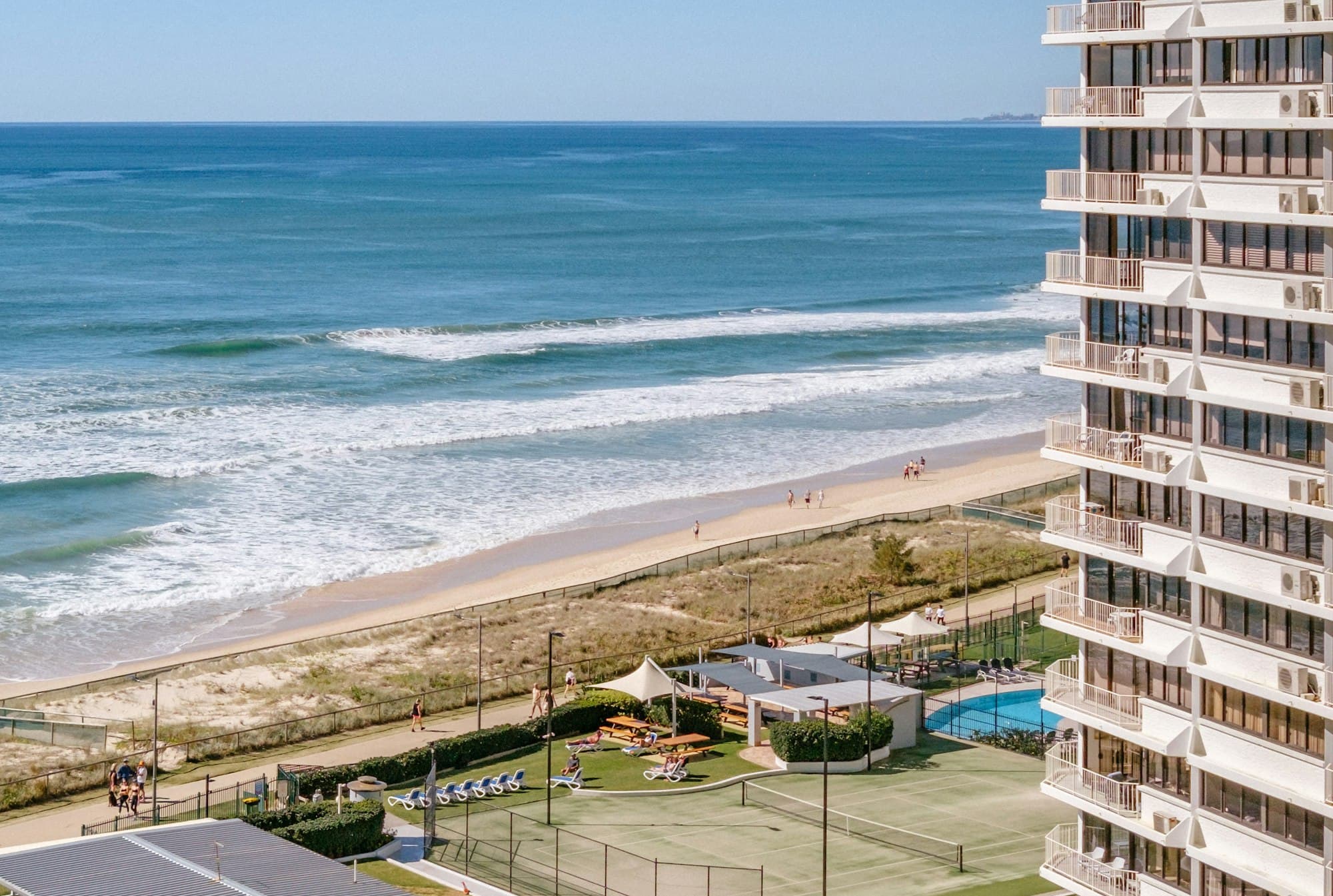
I get some version of "should I buy a rental down there?" often enough that it deserves an honest answer rather than a sales pitch. The truthful version: Myrtle Beach can work well as an investment market, but it's not automatically profitable just because it's a tourist destination, and the rules for what you're even allowed to do with a property vary block by block in a way a lot of out-of-state investors don't expect. This guide walks through what actually matters before you run any numbers.
This isn't a step-by-step purchase guide — my buying guide covers financing, the attorney-closing process, and coastal-specific costs in depth, and everything there applies to an investment purchase too. This one focuses on what's different when the plan is to rent the place out.
What Kind of Investment Are You Actually Making?
"Investment property" covers a few genuinely different strategies here, and it's worth being clear with yourself about which one you're pursuing before you start touring listings:
- Long-term rental (LTR) — a traditional lease, typically a year at a time, to a tenant who lives there full-time. Fewer regulatory hurdles than short-term rental, more predictable (if lower) monthly income, and works in neighborhoods where short-term rental isn't allowed at all.
- Short-term rental (STR) — nightly or weekly stays to vacationers, the Airbnb/VRBO model. Higher revenue potential in the right location, but meaningfully more regulated, more management-intensive, and — critically — only legal in specific places, which is the whole next section.
- Personal use with occasional rental — a vacation home you use part of the year and rent out the rest. This blends lifestyle and investment goals and changes both your tax treatment and your realistic income expectations compared to a pure rental play.
None of these is inherently "the right one" — it depends on your goals, how hands-on you want to be, and, as you'll see below, what's actually legal at the specific address you're considering.
Step 1: Confirm Short-Term Rental Legality — Before You Fall in Love With a Listing
This is the single biggest mistake I see investment buyers make: assuming that because a property is in "Myrtle Beach," short-term rental is automatically allowed. It isn't — and the rules are set municipality by municipality (sometimes zone by zone within a single municipality), not by some single blanket regional rule. A property a few blocks apart can have completely different answers.
City of Myrtle Beach: Most residential zoning districts — anything starting with "R" — do not allow short-term rental (defined as under 90 days), with one specific exception: the RMV (Residential Multifamily Visitor) zone. Only zones specifically shaded for visitor accommodation on the city's zoning map allow it, and the city has confirmed that only 24 houses in traditional residential zones are grandfathered in from before current zoning took effect. Operating an unauthorized short-term rental is a zoning and business-license violation, with real penalties. Every rental property — short-term or long-term — also needs a City of Myrtle Beach business license regardless of zoning.
North Myrtle Beach: Notably different — the city's own site states there's currently no special zoning or permit process for short-term rentals beyond standard business licensing. You still need a business license (renewed annually) and must collect and remit rental accommodations tax to the city, county, and state, and comply with standard ordinances around trash, parking, noise, and occupancy — but there isn't the same zone-by-zone restriction Myrtle Beach proper has.
Surfside Beach: All real estate rentals here are treated as a business requiring a town business license, regardless of rental length. I wasn't able to independently confirm the town's specific short-term-rental zoning districts from a clean primary source at the time of writing — confirm current zoning-specific STR rules directly with the Town of Surfside Beach before assuming a property qualifies.
Unincorporated Horry County: The county requires a business license for "every person engaged in any calling, business, occupation or profession" within unincorporated Horry County — a broad requirement that would reasonably be expected to cover rental activity, though the county's own licensing pages don't spell out rental property specifically. Confirm directly with the Horry County Treasurer's Business License division whether and how it applies to your specific rental before assuming.
None of this is a substitute for verifying the specific property you're considering — zoning can be granular, and HOA rules (covered further down) can be more restrictive than the municipality's rules even where the city or county allows short-term rental. A dedicated pre-purchase legality guide and a separate post-purchase compliance guide (licensing, tax filing, renewals) are both coming as their own articles — this section is the orientation, not the final word for your specific address.
Step 2: Understand the Tax Layers on Rental Income
Short-term rental income here isn't taxed once — it's taxed in layers, and the total depends on exactly where the property sits.
At the state level, South Carolina applies a combined 7% on accommodations rented for less than 90 consecutive days — 5% state Sales Tax plus 2% state Accommodations Tax — collected from the guest and remitted by the operator. On top of that:
- Horry County's hospitality fee on transient rental income is 3% of gross proceeds for properties outside any city's limits, or 1.5% for properties inside city limits (since the city collects its own separate accommodations tax in that case).
- Individual cities (Myrtle Beach, North Myrtle Beach, and others) layer their own local accommodations tax on top of the state and county amounts.
I'm not going to hand you a single blended "total tax rate" figure here, because it genuinely depends on the specific city or unincorporated area the property sits in, and rates are set independently at each level — treat any source that gives you one flat percentage for "Myrtle Beach" with real skepticism. Ask your property manager or the relevant city/county revenue office for the exact combined rate on a specific address before you build a pro forma around it.
Long-term rentals (leases of 90+ consecutive days to the same tenant) are generally exempt from these transient accommodations taxes entirely — one of the real structural differences between the LTR and STR strategies beyond just the regulatory hurdles in Step 1.
Step 3: Know Your Property Tax Reality as an Investor
This is the money fact a lot of out-of-state investors miss: South Carolina assesses investment property at 6% of fair market value, versus 4% for an owner-occupied primary residence. On an identical home, that's a materially higher annual property tax bill than an owner-occupant next door pays — factor the 6% rate into your numbers from the start, not as an afterthought. I cover the full mechanics of how South Carolina calculates property tax — including how the rate is applied and how to apply for owner-occupied status if that ever becomes relevant — in the property tax section of my buying guide.
Step 4: Evaluate the Deal With Real Numbers, Not Guesses
I'm deliberately not going to hand you a "typical cap rate" or "average nightly rate" for Myrtle Beach here — any number I gave you without your own verified data behind it would be a guess dressed up as research, and that's exactly how investors end up with a pro forma that doesn't survive contact with reality. What I can give you is the actual framework serious investors use, so you can plug in real numbers for a specific property:
- Cap rate (capitalization rate) = Net Operating Income ÷ Property Value. Net Operating Income is your realistic rental income minus actual operating expenses (property management, HOA dues, insurance, property tax, maintenance reserve, vacancy) — before your mortgage payment. This tells you the return the property generates independent of how you finance it.
- Cash-on-cash return = Annual pre-tax cash flow ÷ actual cash invested (down payment + closing costs + any upfront repairs). This is the number that actually reflects your leveraged return, since most investors don't pay all-cash.
- Gross rental yield = Annual gross rental income ÷ Property value. A rougher, faster screening number — useful for quickly ruling properties out, not for a final decision.
To fill these in honestly, get real numbers from real sources: a local property manager's honest estimate of achievable rental income for that specific property type and location (not a listing agent's optimistic pitch), an actual insurance quote (coastal wind/flood coverage varies significantly by property — see the insurance sections of my buying guide), the actual HOA dues if applicable, and the real property tax bill at the 6% investment rate from Step 3.
Step 5: Financing an Investment Property
Investment-property financing works differently than financing a primary residence: lenders generally require a larger down payment than they would for an owner-occupied purchase, interest rates typically run higher than an owner-occupant would qualify for on an identical loan, and how a lender counts projected rental income toward your qualifying income varies by loan program and lender. I'm intentionally not quoting specific down-payment percentages or rate premiums here, since both vary by lender, loan program, and your individual financial profile, and change with the broader rate environment — get current numbers directly from a lender who originates investment-property loans regularly, ideally more than one, before you assume what you'll actually qualify for.
Step 6: Don't Skip the HOA and Building-Level Rules
Even where a municipality allows short-term rental, an HOA or condo association can impose its own tighter restrictions — a minimum-stay requirement longer than the city allows, a cap on the number of units that can be actively rented at once, a total ban regardless of zoning, or a separate rental registration and fee on top of the city's. Read the governing documents for rental restrictions specifically before you assume a property's zoning is the last word — the HOA's rules can override what the city otherwise permits. This matters even more for condos specifically, which make up a large share of the area's rental-oriented inventory. My condo buying guide goes deeper on HOA dues, insurance, and rental restrictions specifically.
Common Mistakes Investment Buyers Make Here
- Assuming short-term rental is allowed because the property is "in Myrtle Beach." Confirm the specific zoning and, separately, the HOA's own rules — both have to say yes.
- Building a pro forma around a single "typical Myrtle Beach cap rate" number pulled from a marketing site. Use the framework in Step 4 with real, property-specific numbers instead.
- Forgetting the 6% investment property tax rate and budgeting as if the property will be taxed like an owner-occupied home.
- Not separating the tax layers — state, county, and city accommodations taxes are collected and remitted separately, and missing one is a compliance problem, not just a math error.
- Skipping a real insurance quote before closing. Coastal wind and flood coverage costs vary significantly by property and can materially change your actual return.
Frequently Asked Questions
Can I short-term rent any property I buy in Myrtle Beach? No. It depends on the specific municipality and zoning district, and separately on any HOA rules. The City of Myrtle Beach restricts short-term rental to specific zones (mainly the RMV zone and other visitor-accommodation-designated areas); North Myrtle Beach currently has no special STR zoning restriction beyond business licensing. Always confirm the specific address, not the general area.
Is a condo or a house a better investment here? It depends on your strategy. Condos concentrate a lot of the area's short-term-rental-zoned inventory and often come with on-site management infrastructure, but carry HOA fees and HOA-level rental restrictions. Houses give you more control but are more often in zones where short-term rental isn't permitted at all. Neither is universally better — it depends on what you're trying to do.
What's the actual tax rate on my rental income? It layers: 7% combined state Sales and Accommodations Tax on stays under 90 days, plus a county hospitality fee (1.5% inside city limits, 3% outside), plus the specific city's own accommodations tax if applicable. The exact combined total depends on where the property sits — ask the relevant city or county office for the specific rate at your address.
Does long-term rental avoid these taxes? Yes, generally — leases of 90 or more consecutive days to the same tenant are treated differently from transient/short-term accommodations and aren't subject to the same accommodations tax structure, though you're still subject to standard property tax at the investment-property rate and normal state income tax on rental income.
How do I actually estimate what a property will earn? Don't rely on a single quoted number from a listing. Get a realistic income estimate from a local property manager, verify actual HOA fees and insurance costs, and run the cap rate and cash-on-cash formulas in Step 4 with those real figures — not a marketing estimate.
Want to Talk Through the Numbers?
Every investment property is a different set of trade-offs — zoning, HOA rules, tax layers, and financing all interact differently depending on the specific property. Reach out directly and I'll help you think through whether a specific listing actually pencils out, or browse current listings to see what's available across the areas that allow the strategy you're considering.
Thinking about making the move to the Grand Strand?
Whether you're relocating from up north or planning your retirement on the South Carolina coast, I'd love to help you get there. Follow me on Facebook for more local tips, search Grand Strand listings right here on my site, and join one of my Facebook groups built specifically for people making this move: