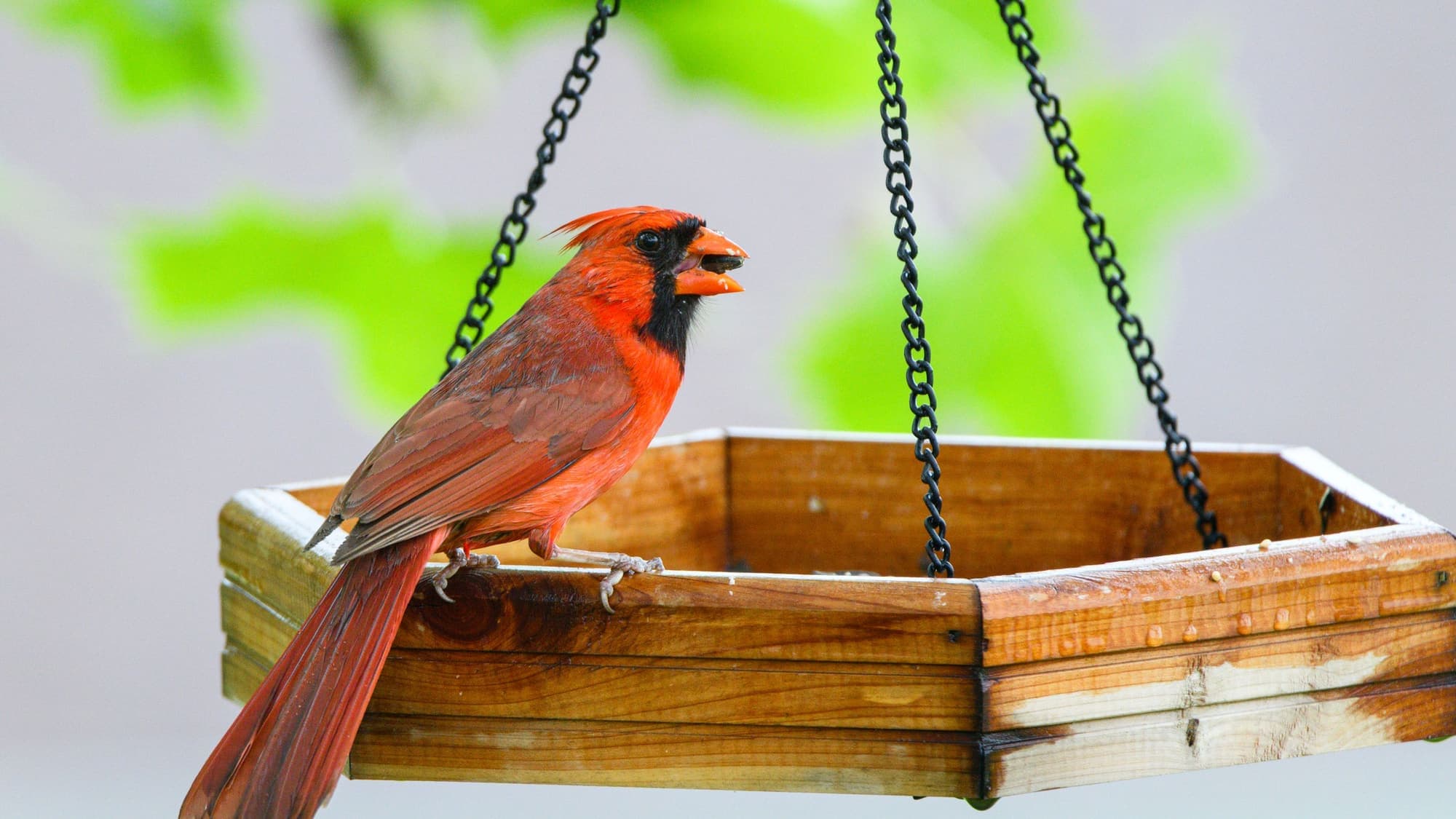
I spent years, genuinely years, trying to get a single cardinal to visit the bird feeder outside my house in Pennsylvania. I'd fill it faithfully, I'd research the "right" seed mix, I'd wait. Every once in a great while, one would show up, and it felt like an event. I'd practically call someone to tell them.
Then I moved to South Carolina, put out a halfway decent feeder, and within what felt like days, I had what I can only describe as a full family reunion happening in my backyard. Cardinals showing up in pairs like it was nothing. Several at once. Like they'd all gotten the same group text and decided my feeder was the place to be that week.
And that's before we even get to the bird I'm most excited about. I'm still not fully convinced it's real.
It's Not Your Imagination. There Really Are a Lot of Birds Here.
The Grand Strand's mix of salt marsh, freshwater ponds and lagoons, maritime forest and beach creates exactly the kind of varied habitat that draws a serious range of birds, including plenty that pass through on migration. This isn't just a nice-backyard situation. Huntington Beach State Park has a birding checklist of more than 300 species seen inside the park, and the state parks system says it's considered by many to be the best birding spot on the East Coast.
What You'll See If You Put Out a Decent Feeder
| Bird | When | What to know |
|---|---|---|
| Northern cardinal | All year | Shows up here with a reliability that still makes me a little emotional |
| Carolina wren | All year | South Carolina's official state bird. Tiny, cheerful and astonishingly loud |
| Painted bunting | Warm months | The one I promised. More on this beauty below |
| Eastern bluebird | All year | Picky about housing. A good nest box is the way in |
| Blue jays, woodpeckers, sparrows | All year | The regular backyard crowd |
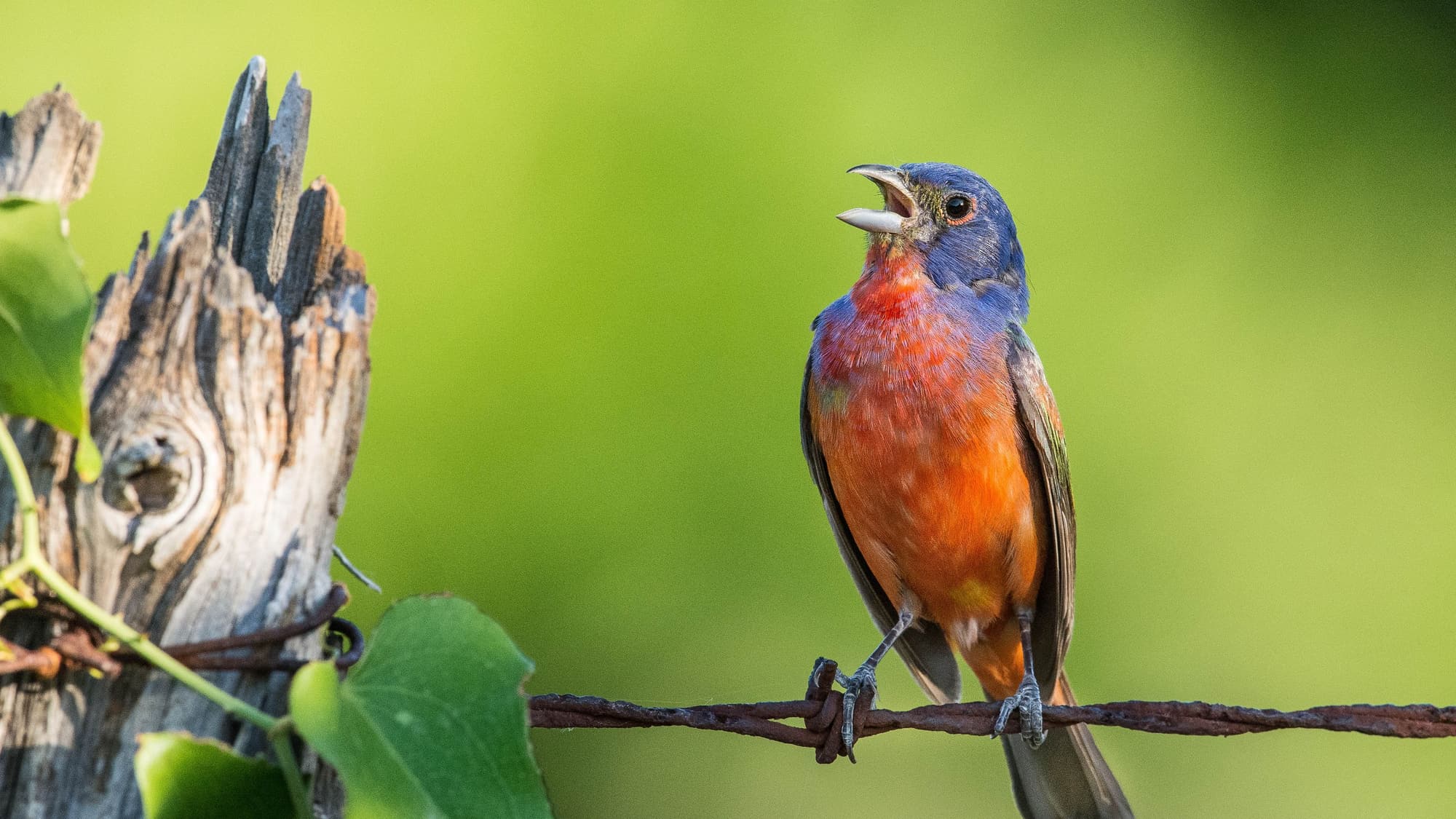
Here's the bird I've been teasing: the painted bunting. The males have a blue head, a lime-green back and a bright red belly, and if you've never seen one, prepare yourself.
It looks like someone let a child color a bird with every marker in the box, and somehow it worked.
They spend the warm months in coastal South Carolina, generally arriving in spring and heading south again by fall, so keep your eyes open around your feeder from about late April on.
My Next Project: A Bluebird Box
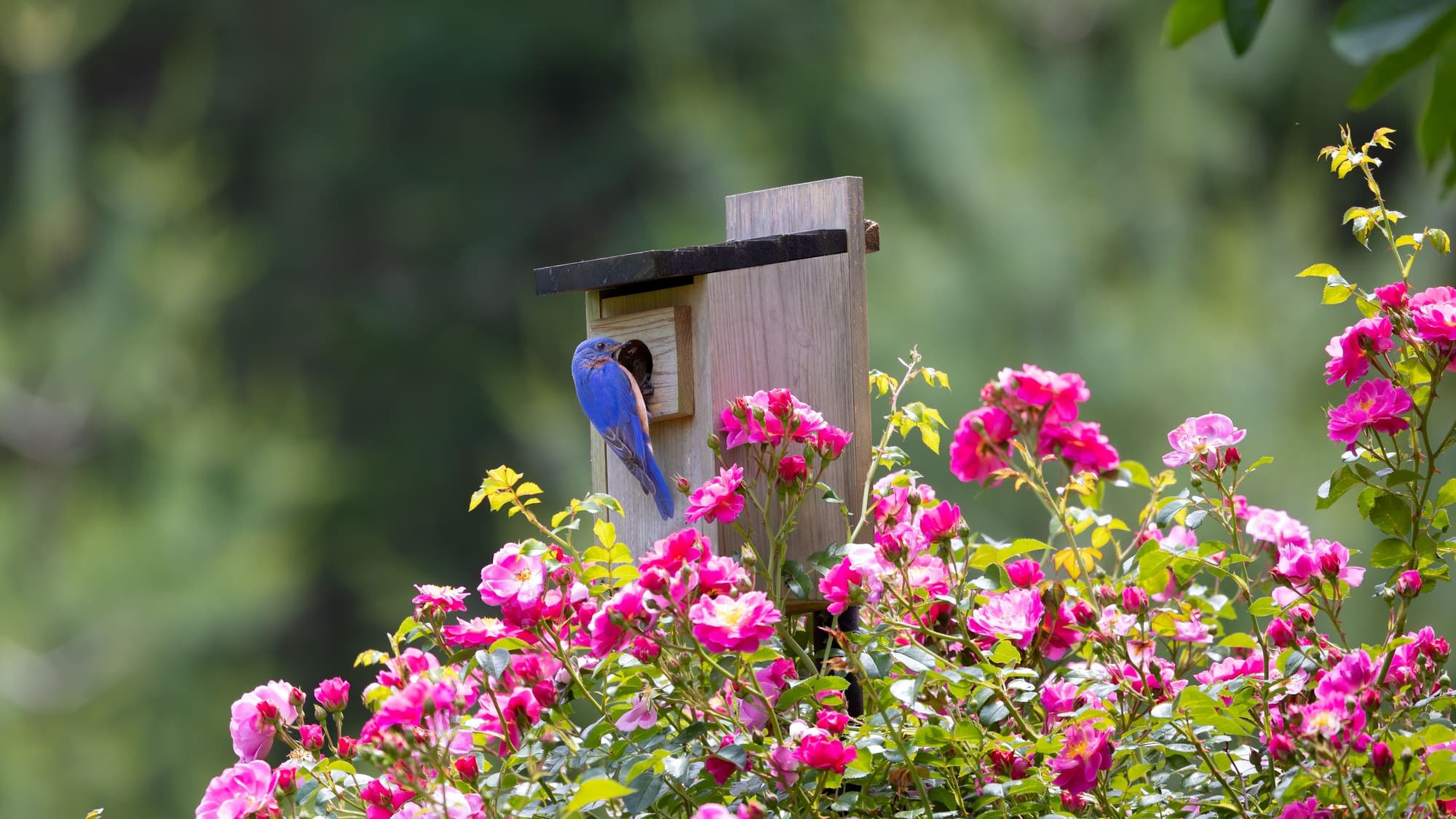
Eastern bluebirds are around here year-round, and unlike a lot of backyard birds, they're famously picky about housing. A feeder won't do it. They want a proper nesting box. Clemson Extension has a whole guide for South Carolina, and the basics are refreshingly simple:
- An entry hole no bigger than 1½ inches, which keeps out bigger birds like European starlings
- Mounted about five feet off the ground, facing east if you can, away from harsh afternoon sun and rain-driving north winds
- In open, park-like spaces with scattered trees, not tucked into thick brush
I haven't put mine up yet, but it's next on my list.
Then There Are the Big Ones
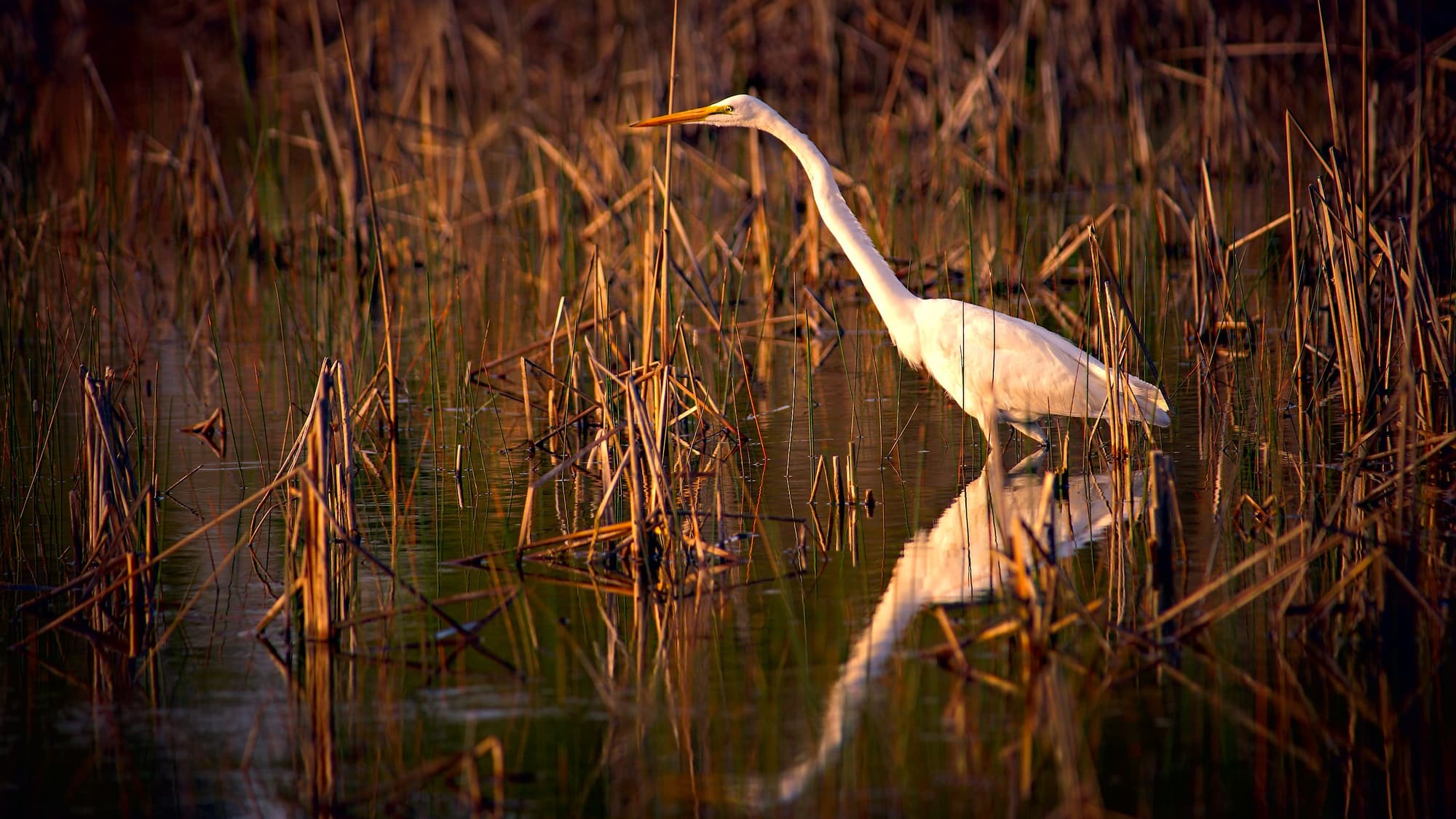
Backyard birds are one thing, but the real show around here happens near the water. Great egrets and great blue herons stand in shallow marshes and pond edges with a stillness that looks almost staged, like they're posing for a nature documentary that never quite starts filming. Snowy egrets, smaller and scrappier, dart after fish with a lot more energy than their bigger cousins. Wood storks, ospreys, and in the warmer months even roseate spoonbills show up in the right marshy spots. If you've never seen a spoonbill in person, it looks exactly as improbable and pink as it does in photos.
Where to Go If You Want to See the Bigger Stuff
Huntington Beach State Park is the obvious answer, and it's worth building a whole morning around, especially along the causeway, where the freshwater lagoon meets the salt marsh. The park runs birding programs throughout the year, and the education center keeps a log book where birders note what they've been seeing lately, which is a lovely way to know what to look for. (I've compared it with Myrtle Beach State Park side by side here.)
The quieter marsh edges along the Waccamaw River and the Intracoastal Waterway are also worth a slow kayak trip if you want to watch herons and egrets going about their business up close, without the crowds.
Why This Has Become One of My Favorite Things About Living Here
I did not expect bird watching to become a real hobby of mine, and yet here we are. There's something quietly satisfying about coffee on the porch, watching a whole cardinal family work through the feeder while a mockingbird argues with something in the next yard over.
If you're moving here from somewhere with a slower, quieter backyard bird scene, do yourself a favor and put out a good feeder early. You will not have to wait years for anything to show up, and honestly, that still feels a little bit like cheating.
Thinking about making the move to the Grand Strand?
Whether you're relocating from up north or planning your retirement on the South Carolina coast, I'd love to help you get there. Follow me on Facebook for more local tips, search Grand Strand listings right here on my site, and join one of my Facebook groups built specifically for people making this move: