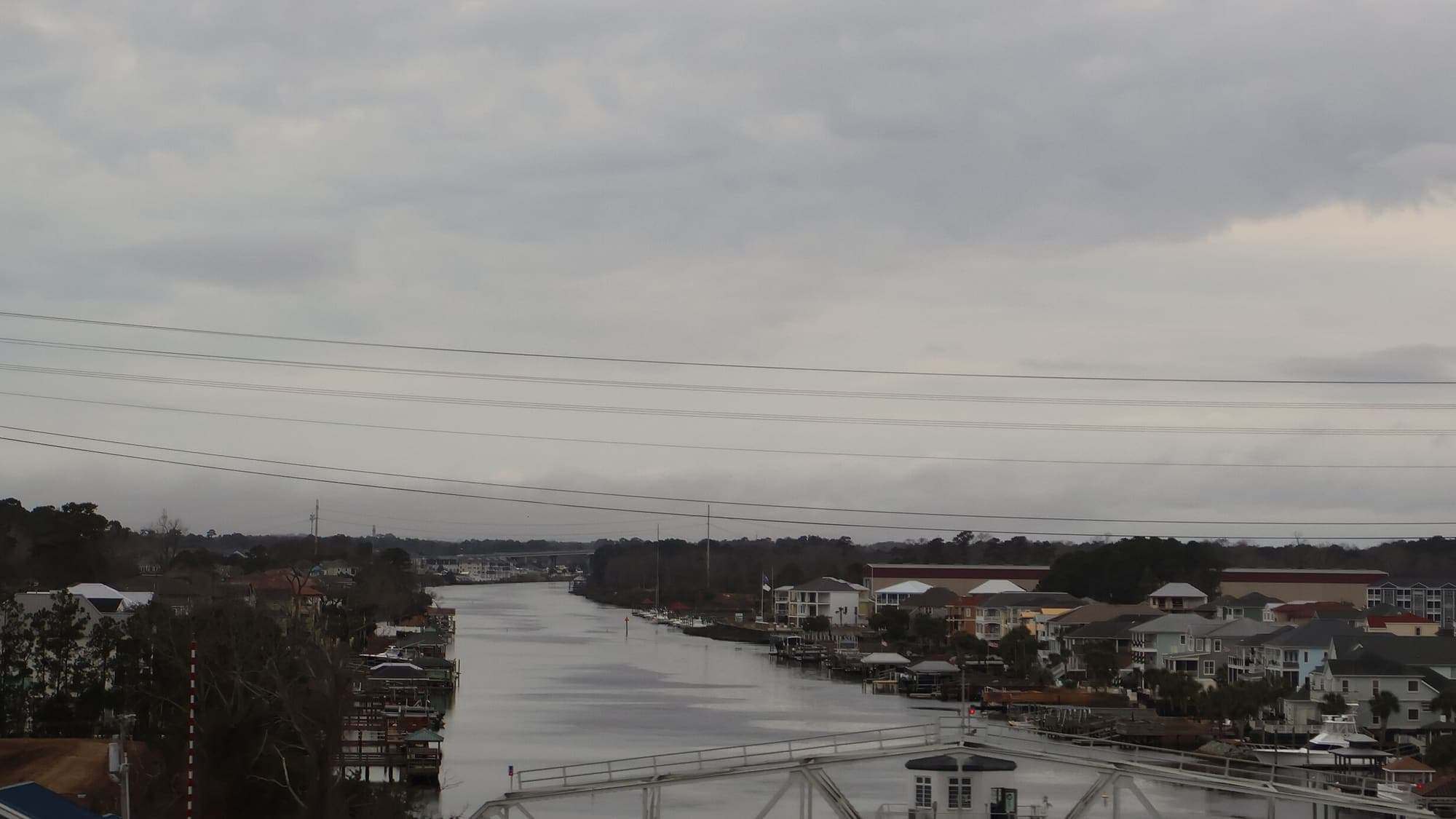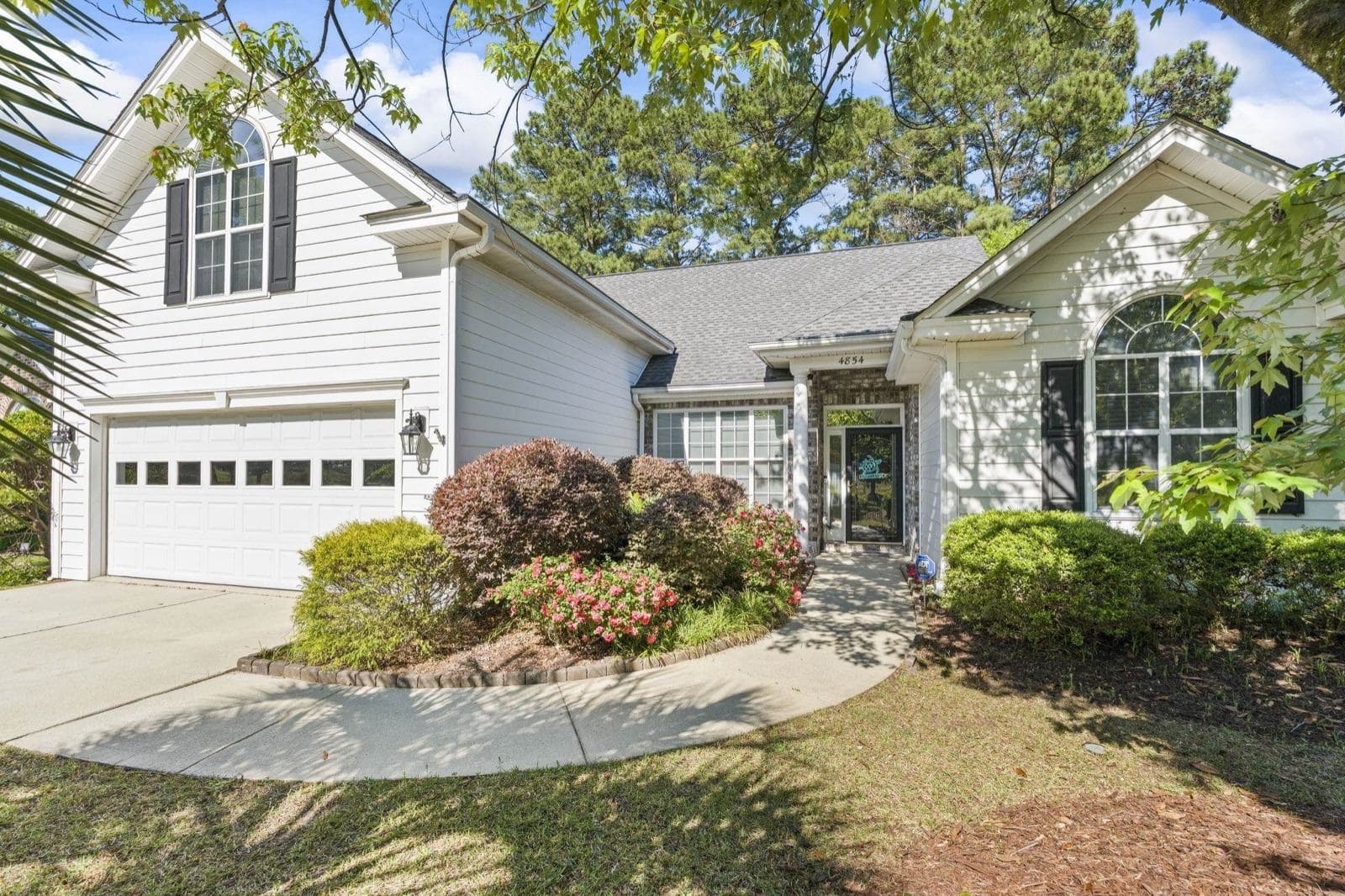
Carolina Forest confuses people who are used to buying in towns. You'll see it on a listing as though it were a city, you'll hear locals talk about it as a distinct place with its own identity, and it has the population and the amenities to justify that. What it doesn't have is a town hall.
There is no Town of Carolina Forest. No mayor, no municipal council, no municipal ordinances of its own. It's an area of Horry County — planned, developed, and named by a developer, then grown into something the size of a small city while remaining, governmentally, county land. Its recreation center is a Horry County facility. Its zoning is administered by Horry County Planning and Zoning, which has zoned the entire county since April 17, 2001 and handles rezonings, variances and compliance through the county Planning Commission and County Council.
That's not a drawback. For a lot of buyers it's the appeal — one fewer layer of local government between them and their house. But it changes who you call, and it changes what "the neighborhood decides" means. Here's the honest version of living here.
The Governance Fact That Actually Affects You
In a town, there's a public body that sets local rules, and you can go argue with it. In Carolina Forest, the entity that most directly governs your street is almost certainly your homeowners association, not a government.
That's the real structural difference. Carolina Forest is a collection of covenant-governed subdivisions. Architectural standards, what you may park where, fence rules, landscaping, pond maintenance, short-term rental restrictions — those come from your neighborhood's recorded covenants and its board, not from an ordinance you can vote on in a municipal election. County ordinance sits above that, and county services (sheriff, roads, planning, parks, libraries, schools) come from the county.
Practically, for a buyer:
- Read the covenants before you're under contract. In Carolina Forest they're not boilerplate — they're the operative rulebook for daily life. My guide to buying in a Myrtle Beach HOA covers what to request and what to look for.
- Get the association's budget and reserve study. Amenity-heavy neighborhoods have real maintenance liabilities. A thin reserve is a future special assessment.
- Ask which association(s) you're joining. Some Carolina Forest neighborhoods have a sub-association inside a master association, meaning two sets of dues and two sets of rules. Confirm the total.
- Verify rental rules at the covenant level. Whatever county rules allow, your HOA may prohibit. If rental flexibility matters to you, this is the document that decides it.
What's Actually Here
The county operates the Carolina Forest Recreation Center at 2254 Carolina Forest Blvd. Horry County describes it as offering a "full size gymnasium for open gym and sport leagues, a fitness room for exercise classes, a multipurpose room with a divider for multiple events, locker rooms, kitchen, and a rock climbing wall." For a community without a municipal parks department, that's a substantial public facility, and it's the kind of thing that quietly makes a place feel like a town even when it isn't one.
My brokerage keeps an office on Carolina Forest Boulevard — 4999-10 Carolina Forest Blvd — so this isn't a part of the county I visit only when a listing comes up.
Two things I'd tell any buyer to see for themselves rather than take my word on: the commute, and the errand run. Carolina Forest sits off US 501, between Myrtle Beach and Conway. It is a driving community, not a walking one. Errands happen on Carolina Forest Boulevard and the surrounding corridors; the beach is a drive rather than a stroll. Whether that trade is worth a newer house on a planned street depends entirely on how often you actually make the drive — a trip to the oceanfront twice a month is a different proposition from one every morning in season. Drive it at 8am on a weekday and again on a Saturday in July before you decide.
On schools: the area is served by Horry County Schools, but attendance zones are assigned by address and they change as the district adds capacity in fast-growing areas. Do not rely on a listing's school claim, and don't rely on mine. Confirm the current assignment for the specific address with the district directly. The relocation guide covers the wider process of sorting schools out before you move.
What the Market Did Here
These are July 2026 figures for Carolina Forest, current as of August 10, 2026. They're a dated snapshot, not live data.
Single-family homes
| Metric | July 2026 | Year over year | Year to date, thru July 2026 |
|---|---|---|---|
| Median sales price | $475,000 | +2.5% | $475,000 (+8.8%) |
| Closed sales | 81 | −37.7% | 543 (−28.0%) |
| New listings | 113 | +1.8% | 780 (−17.7%) |
| Days on market until sale | 105 | −7.1% | 117 (−4.9%) |
| Percent of list price received | 97.4% | −0.2% | 97.5% |
| Inventory of homes for sale | 290 | −12.7% | — |
Townhouses and condos
| Metric | July 2026 | Year over year | Year to date, thru July 2026 |
|---|---|---|---|
| Median sales price | $208,000 | −6.8% | $200,000 (−7.4%) |
| Closed sales | 44 | +46.7% | 228 (+2.7%) |
| New listings | 53 | +20.5% | 374 (−5.1%) |
| Days on market until sale | 121 | +10.0% | 134 (+30.1%) |
| Percent of list price received | 96.7% | −0.6% | 96.8% |
| Inventory of homes for sale | 181 | −3.2% | — |
Three things I'd draw your attention to.
The percent-of-list figure is the tell. At 97.4% for single-family homes, Carolina Forest sellers were holding closer to asking price this July than sellers in the beach ZIPs to the east — Surfside Beach's single-family figure was 94.4% for the same month. That gap is meaningful. It says buyers here have less negotiating room on a well-priced house than they do a few miles toward the ocean.
Volume fell hard while price held. Single-family closings were down 37.7% year over year for the month and 28.0% year to date, with the year-to-date median still up 8.8%. Fewer transactions at firm prices is a market where the two sides disagree about value and fewer deals clear. As a buyer, that means patience is rewarded and lowballing generally isn't. As a seller, it means pricing correctly on day one matters more than it did two years ago, because there's no volume to bail out an overpriced listing.
The condo side is going the other way. Closings up 46.7% for the month against a median down 6.8%, and year-to-date days on market up 30.1%. Softer pricing moving more units. If you're weighing attached versus detached here, those are two genuinely different markets in the same zip code.
These figures don't account for sale concessions or down payment assistance, and that percent changes calculated on small monthly samples can look extreme. Ask me for current figures before you price anything — July 2026 will be stale by the time it matters to you.
What to Verify Before You Buy Here
Flood zone — yes, even inland. Carolina Forest is across the Waterway from the beach, and buyers assume that settles it. It doesn't. This is a low, wet part of South Carolina, much of it built around engineered ponds and drainage, and the Grand Strand has seen inland freshwater flooding in named storms. Pull the FEMA zone on the actual parcel and ask about the neighborhood's drainage history. Understanding flood zones here explains what the zone determines and when your lender must require coverage.
New construction versus resale. A large share of the housing stock here is recent, and a meaningful share is still being built. Those are different transactions with different risks — builder contracts, warranty terms, and what an incomplete community amenity actually obligates the developer to deliver. New construction vs. resale on the Grand Strand covers the trade honestly.
Whether the neighborhood is finished. In a still-developing subdivision, ask what remains to be built, on what timeline, and who's responsible for the amenities. Buying beside a future phase is fine if you know it's coming.
The assessment ratio. South Carolina taxes an owner-occupied legal residence at 4% and non-owner-occupied property at 6%. You have to file for the legal residence classification — it isn't automatic at closing. The property tax guide covers it, and buyers 65 or older who've been South Carolina residents at least a year should also ask the county about the § 12-37-250 homestead exemption on the first fifty thousand dollars of fair market value.
Frequently Asked Questions
Is Carolina Forest a city? No. There's no municipal government named Carolina Forest. It's an area of Horry County, governed by county ordinance and county zoning, with individual neighborhoods governed by their own recorded covenants and homeowners associations.
Does that mean lower taxes? Not necessarily, and I'd be careful with that assumption. Your bill depends on the taxing districts the specific parcel falls in, and the factor that moves it most is the 4% owner-occupied versus 6% non-owner-occupied assessment ratio. Separately, HOA dues here are a real monthly cost in their own right. Compare total monthly cost using the assessor's actual figures for the address, not a general rule about towns and counties.
Is it a good place to live if I want to be at the beach? It's a drive, not a walk — typically down US 501. People who want sand at the end of the street generally end up in the beach towns; people who want a newer, larger house on a planned street and don't mind driving end up here. Best Places to Live on the Grand Strand puts it beside the alternatives.
How are the schools? The area is served by Horry County Schools. Attendance is assigned by address and zones change with growth, so confirm the current assignment for the specific property with the district rather than relying on a listing.
Why did sales drop so much? Single-family closings were down 37.7% year over year in July 2026 while the year-to-date median rose 8.8%. That pattern — lower volume, firm prices — generally reflects buyers and sellers disagreeing on value rather than a price decline. What it means for you depends on which side of the table you're on.
How does it compare to Market Common or Conway? The Market Common is the walkable, in-city option; Conway is the historic inland small town. Carolina Forest is neither — it's newer, larger-lot, planned suburban housing between the two. The community guide has more.
Come See Whether the Trade Works for You
The Carolina Forest decision is really one question: is a newer house on a planned street worth driving to the beach? Plenty of people answer yes and never regret it. Some answer yes and miss the water within a year.
I'd rather you find that out on a Saturday drive than after closing. Tell me what your week actually looks like and I'll show you the neighborhoods that fit it — and pull the covenants and dues on any of them before you get attached. Start with the Carolina Forest community guide, browse what's listed, or get in touch. If you already own here and want to know what it's worth today, start with a valuation.
Market figures in this article are July 2026 snapshots and will go out of date. School attendance zones, county ordinances and HOA covenants change — confirm all of them for the specific address with the district, Horry County, and the association. This article is not legal or tax advice; confirm tax treatment with the county assessor or a South Carolina tax professional.
Thinking about making the move to the Grand Strand?
Whether you're relocating from up north or planning your retirement on the South Carolina coast, I'd love to help you get there. Follow me on Facebook for more local tips, search Grand Strand listings right here on my site, and join one of my Facebook groups built specifically for people making this move: