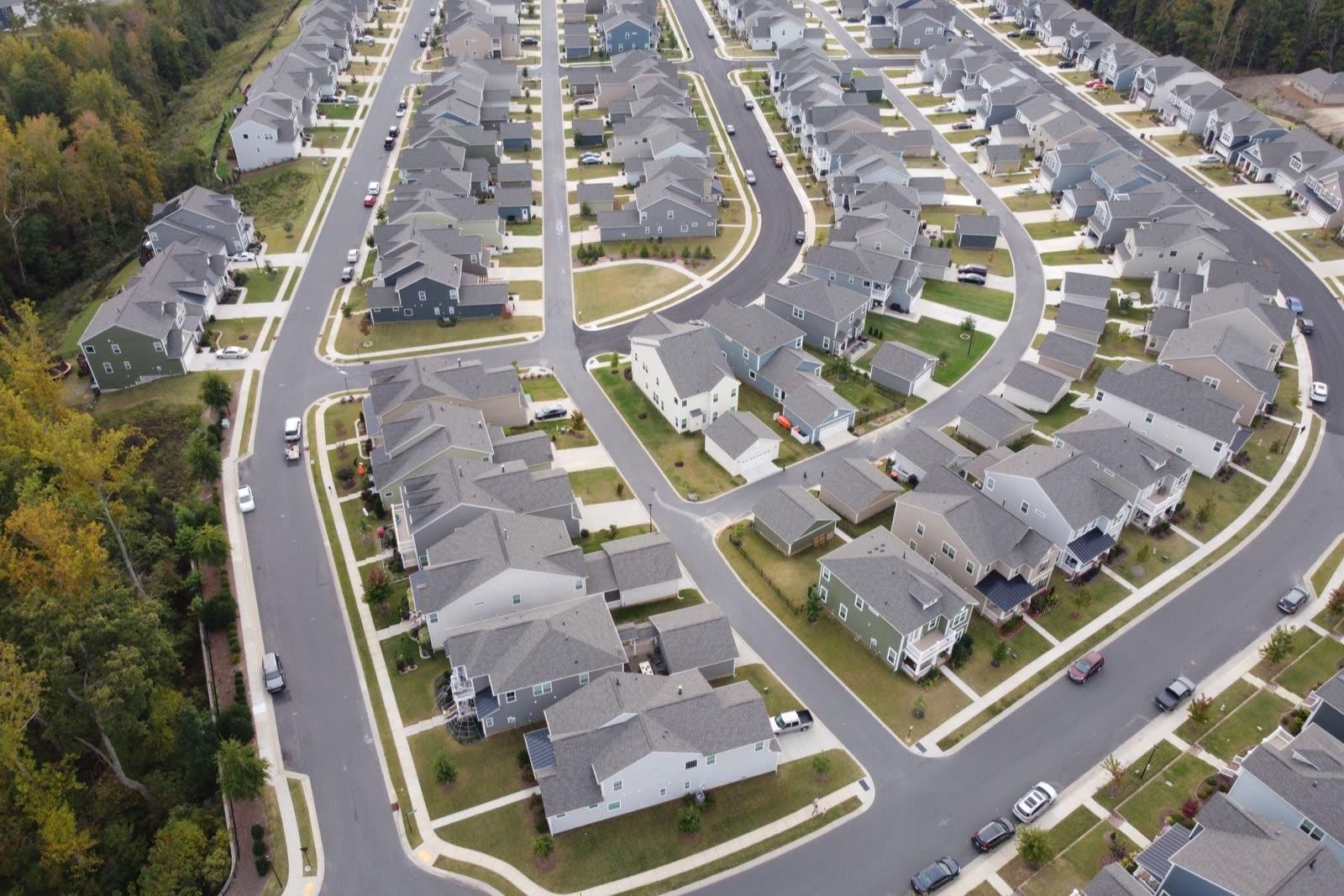
"Is it worth living east of 17?" is one of the first things people ask me about Surfside Beach. It's a fair question, because that one road splits the town into two very different markets.
So I pulled every house sale with a Surfside Beach address from the past year, put each one on the map, and sorted them by which side of Business 17 they sit on. Here's the short answer, and then the details that actually decide it.
The short answer: east of Business 17, you're paying about two-thirds more per square foot for the walk to the sand, an older house, and usually no HOA. West of it, you get a newer house in a planned neighborhood for a lot less, and you drive or cart to the beach. Neither is the "right" side. It depends on how often you'll really be on that beach.
First, which "17" are we talking about?
Two highways carry the number 17 here, and people mix them up all the time.
- Business 17 (Kings Highway) runs straight through the middle of Surfside Beach, parallel to the ocean. This is the line people mean when they say "east of 17."
- The 17 Bypass runs farther inland, west of town.
Everything in this article is measured from Business 17. If a listing says "east of 17," ask which one.
What a year of sales shows
These are detached houses with a Surfside Beach address that closed between 17 November 2025 and 17 November 2026. I left out mobile and manufactured homes on leased land (more on those below), and the 11 of 321 addresses I couldn't place on a map.
| Item | East of Business 17 | West of Business 17 |
|---|---|---|
| Houses sold | 99 | 159 |
| Middle sale price (median) | $705,000 | $410,000 |
| Lowest to highest sale | $250,000 – $1,699,900 | $265,000 – $735,000 |
| Median price per heated sq ft | $371 | $224 |
| Median heated size | 1,982 sq ft | 1,788 sq ft |
| Median year built | 2000 | 2010 |
| Median days on market | 69 | 89 |
| Sold for $600,000 or more | 63 of 99 | 13 of 159 |
| Listed with an HOA fee | 18 of 99 | 148 of 159 |
A few things jump out.
The price gap is mostly the land, not the house. East-side houses aren't much bigger, and they're about ten years older. The extra $147 a square foot is paying for the location.
The two sides barely overlap. Only 3 east-side houses sold under $300,000. Only 13 west-side houses sold for $600,000 or more, and the highest west-side sale was $735,000. Once you're past the mid-$700s, you're shopping east.
Most of the premium is in the last few blocks. "East of 17" isn't one price. I measured how far each east-side house sits from Business 17. Houses within a quarter mile of the highway had a middle price of $540,000. Between a quarter and half a mile, $590,000. Past the half-mile mark, in the blocks nearest the ocean, it jumped to $1,025,000.

So if you want east-side living without the top-dollar price, look at the streets closest to Business 17. You'll walk farther to the beach, but you'll pay about half as much as the blocks by the ocean.
Six of those houses were right on Ocean Boulevard, selling from $766,900 to $1,475,000. Oceanfront is its own market, with its own rules. Read my oceanfront setback article before you look at one.
East-side houses sold faster. The median east-side house spent 20 fewer days on the market. That's a small sample, so don't read too much into it.
For month-by-month numbers for the whole town, see the Surfside Beach housing market page.
The HOA difference is bigger than the price difference
This is the part most "east vs. west" articles skip. On the east side, most houses have no HOA. On the west side, almost every house does.
West of Business 17 is mostly planned neighborhoods built in the last few decades, such as Ocean Palms, Deerfield, Belle Mer, Beach Village and Southwood. Where a fee was listed, the median was $75 a month. That's modest, but it comes with rules about fences, sheds, parking, rentals and what you can paint.
East of Business 17 is mostly older streets, laid out before HOAs were common. Of the 99 east-side houses that sold, only 18 listed an HOA fee. If you want a boat in the driveway, a workshop out back, or simply no one to ask, the east side gives you more of that. My guide to Surfside Beach homes with no HOA shows where they sold and what the town still regulates. My HOA guide explains what to read before you buy into one.
"No HOA" still doesn't mean "no rules." Town zoning, building permits and the flood ordinance apply on every lot. And verify the HOA status of the specific house yourself. A listing's HOA field is filled in by the listing agent.
Don't trust the "east of 17" filter on home search sites
Listing sites let you filter for "east of Bus 17." That filter only finds homes the listing agent tagged that way. Of the 148 east-side sales I mapped, 49 weren't tagged east of Business 17 at all. Most of those were manufactured homes, but 12 were regular houses.
If you're searching east, search by map, not by checkbox. Or let me set up a search for you that draws the line properly.
Mobile and manufactured homes on leased land
The cheapest way to live east of Business 17 is a manufactured home in one of the leased-land communities. In the past year, 35 sold on the east side, with a middle price of $320,000, and 15 of them sold for under $300,000.
The catch is in the name: you own the home, not the land under it. Almost all of them listed a monthly fee (median $376), and on leased land that can include ground rent as well as amenities. Before you write an offer, ask:
- What exactly does the monthly fee cover, and how much has it gone up in recent years?
- How long is the land lease, and who decides whether it's renewed?
- Will your lender finance a home on leased land? Ask before you fall in love, because not every lender will.
- Can you rent the home out, and does the community allow a sale without its approval?
Evacuation zone: east is Zone A
The Town of Surfside Beach says that within the town, everything east of Business 17 is in hurricane evacuation Zone A, and everything west of it is in Zone B. The zones exist to show how exposed each area is to storm surge, and Zone A is the most exposed.
That doesn't make the east side unsafe. It does mean:
- Learn your zone and sign up for the town's emergency alerts. If you plan to rent the home out, think about what a storm evacuation would do to your bookings.
- Your flood risk and insurance cost depend on the specific lot, not just the side of the road. Some west-side lots sit low too.
Check the flood zone for any address on FEMA's Flood Map Service Center, and get real insurance quotes before you're under contract. My flood zone guide and wind insurance guide explain both. One piece of good news for the whole town: Surfside Beach is a Class 7 community in FEMA's Community Rating System, which the town says gives local flood insurance policies a 15% discount.
"Close to the beach" needs a real test
Being east of 17 doesn't automatically mean a short walk. From the streets closest to the highway, it's still a real walk with chairs, a cooler and an umbrella. That's exactly why those streets cost less.
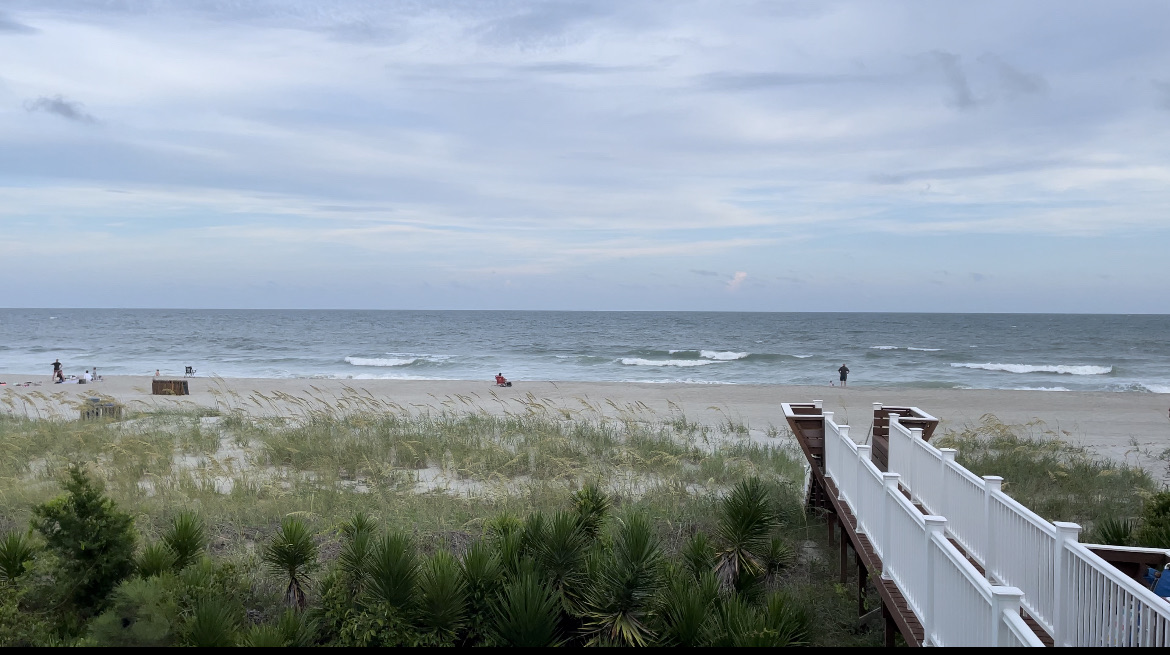
The town has 36 beach access points. Before you buy, walk from the front door to the nearest one, at the pace you'd actually walk it, carrying what you'd actually carry. Then check:
- Is the access step-free? The town lists wheelchair access at 3rd Avenue North, the pier, 3rd Avenue South, 13th Avenue South and Melody Lane, and beach mats at several of those.
- Are there showers or restrooms nearby? The town's beach page lists which accesses have them.
- What's the street like on a July Saturday? Visit a weekday showing and a summer weekend. Street parking, rentals next door and beach traffic all vary block by block.
- Bring everyone who'll make the walk. A route that's easy for you may not be easy with a wagon, a stroller or a bad knee.
Parking: what owners get
From March 1 through October 31, the town charges for parking in its public lots from 8 a.m. to 6 p.m. Premium lots cost $3 an hour or $15 a day, other lots $2 an hour or $10 a day, and the pier lot $4 an hour with no daily cap.
If you own a home inside town limits, the town's rules help either way:
- Residents can register their vehicles and park free in public spaces. The pier lot and the private lot at 4th Avenue North and Ocean Boulevard don't take town registrations.
- Owners who live elsewhere get two free parking passes per household, and can buy more for $40 each.
That makes a west-side house inside town limits more beach-friendly than it first looks. You drive over and park for free.
Check that the house is really inside town limits. The town's limits run from 17th Avenue North down to Melody Lane, and from the ocean west to Sandy Lane and Azalea Lane. Many homes outside those lines still have a "Surfside Beach" mailing address. That changes who you call for services, which parking passes you qualify for, and which rules apply. (My sales numbers above use the mailing address, so they include some homes just outside town.)
Golf carts: check the route, not just the cart
A cart in the driveway is a big part of why people want to live east of 17. But you can only drive it on roads the law allows, and no golf carts, cars or mopeds are allowed on the beach itself. Only lifeguards, police and town vehicles can drive on the sand.
The state rules (registration, daylight-only driving, roads with a speed limit of 35 mph or less, within four miles of your registered address) and the town's own ordinance are in my Surfside and Garden City guide. Map your route to the beach, the pier and the places you'd go for dinner before you count on the cart.
Love the house, and know what it costs to keep up
East-side houses are older. The median one sold in the past year was built in 2000, and 37 of the 99 were built before 1990. Many are raised up, with parking or storage below and the living space above.
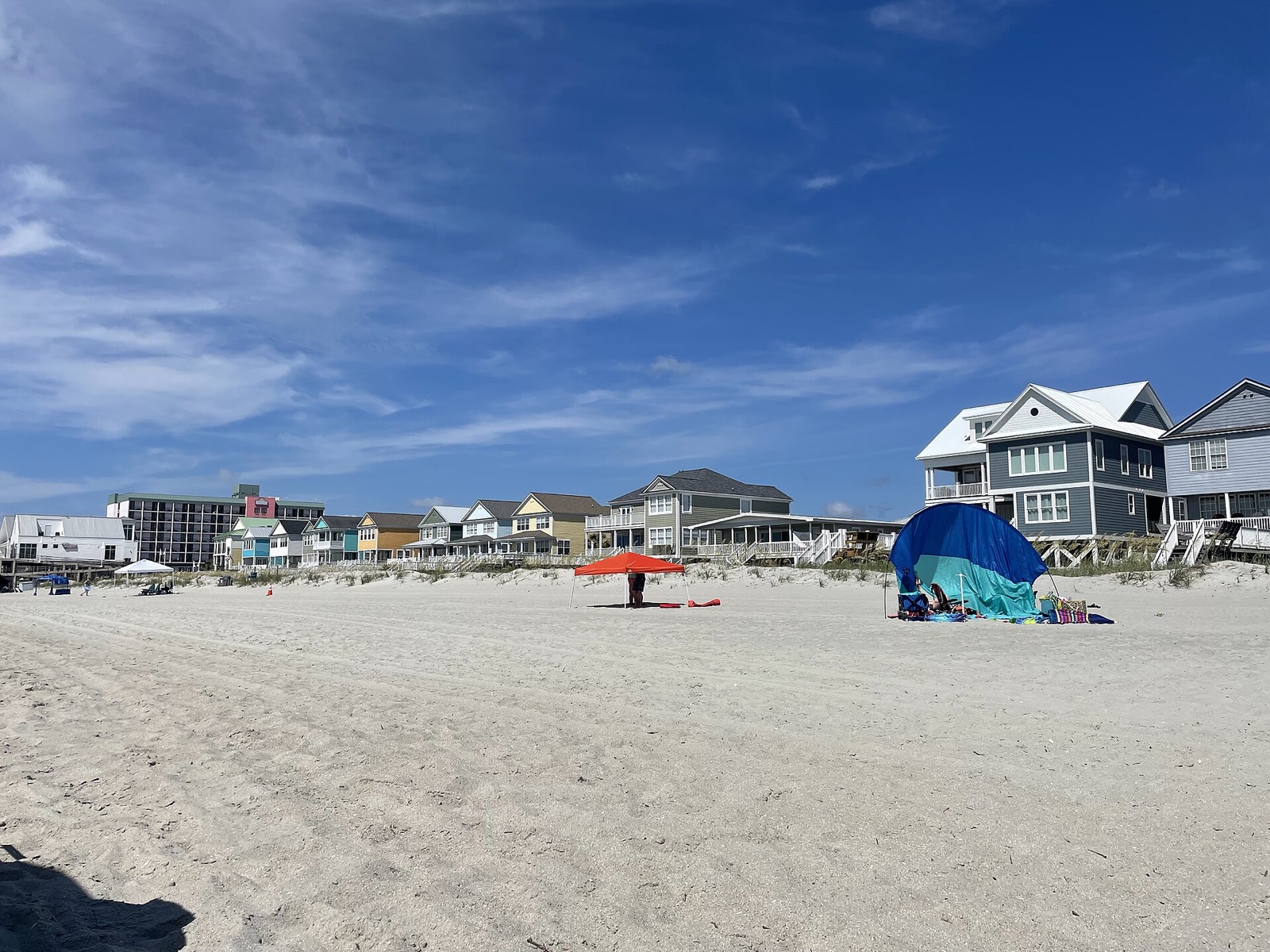
During showings, look past the paint:
- How many steps are there from the car to the kitchen? Picture carrying groceries up them in the rain.
- Where will the beach gear and the golf cart go?
- What shape are the roof, the exterior stairs and decking, the railings and the HVAC? Salt air is hard on all of them.
- Has the house been renovated with permits? Ask the town for the permit history.
Then compare the whole monthly cost, not just the price: mortgage, property taxes, homeowners plus wind and flood insurance, HOA or land fees, and upkeep. Two houses at the same price on opposite sides of 17 can cost very different amounts to own. My checklist for buying near the beach walks through it.
So, is east of 17 worth it?
It's worth it if:
- you'll be on the beach most days, not a few times a summer
- you'd rather have an older house with no HOA than a newer one with rules
- you want to rent it out by the week (check the current town rules on short-term rentals first, because they change)
West of 17 makes more sense if:
- you want more house, a newer build or a two-car garage for the money
- an HOA that keeps up the neighborhood sounds like a plus, not a minus
- a short drive to free owner parking at the beach is close enough
If you already own on either side and wonder what your home is worth against these numbers, my Surfside Beach seller page is the place to start.
Frequently asked questions
Is "east of 17" the same as oceanfront? No. East of Business 17 covers every street between the highway and the ocean. Oceanfront is only the row on the sand, and it sells at a big premium even compared with the rest of the east side.
How much more do houses cost east of 17 in Surfside Beach? In the past year, the middle house sale east of Business 17 was $705,000, against $410,000 west of it. That's $371 a square foot against $224. Most of the gap comes from the blocks nearest the ocean: houses within a quarter mile of Business 17 had a middle price of $540,000.
Are east-side houses older? On average, yes. The median east-side house sold in the past year was built in 2000, against 2010 west of the highway. But 21 of the 99 east-side houses were built in 2015 or later, so newer houses are out there too.
Do most houses in Surfside Beach have an HOA? West of Business 17, almost all of them did in the past year's sales (148 of 159). East of it, most didn't (81 of 99 listed no HOA fee).
Which hurricane evacuation zone is Surfside Beach in? Within town, east of Business 17 is Zone A and west of it is Zone B, according to the Town of Surfside Beach.
Can I drive my golf cart on the beach? No. The town doesn't allow golf carts or other private vehicles on the beach at any time.
Want to see both sides?
The fastest way to decide is to see a few houses on each side on the same day. Tell me your price range and I'll set it up: east, west and an honest comparison of what each one would cost you to own.
Thinking about making the move to the Grand Strand?
Whether you're relocating from up north or planning your retirement on the South Carolina coast, I'd love to help you get there. Follow me on Facebook for more local tips, search Grand Strand listings right here on my site, and join one of my Facebook groups built specifically for people making this move: