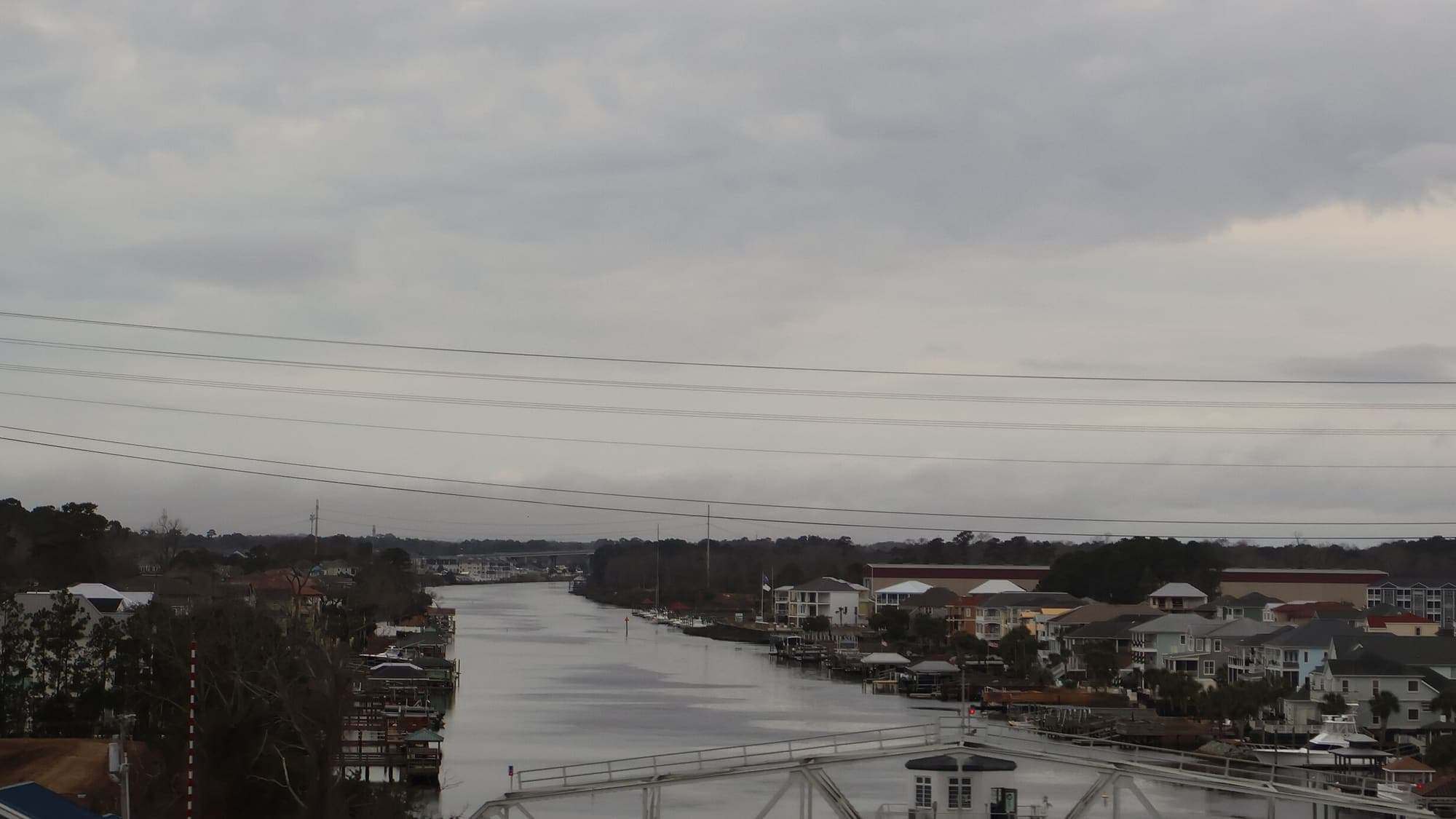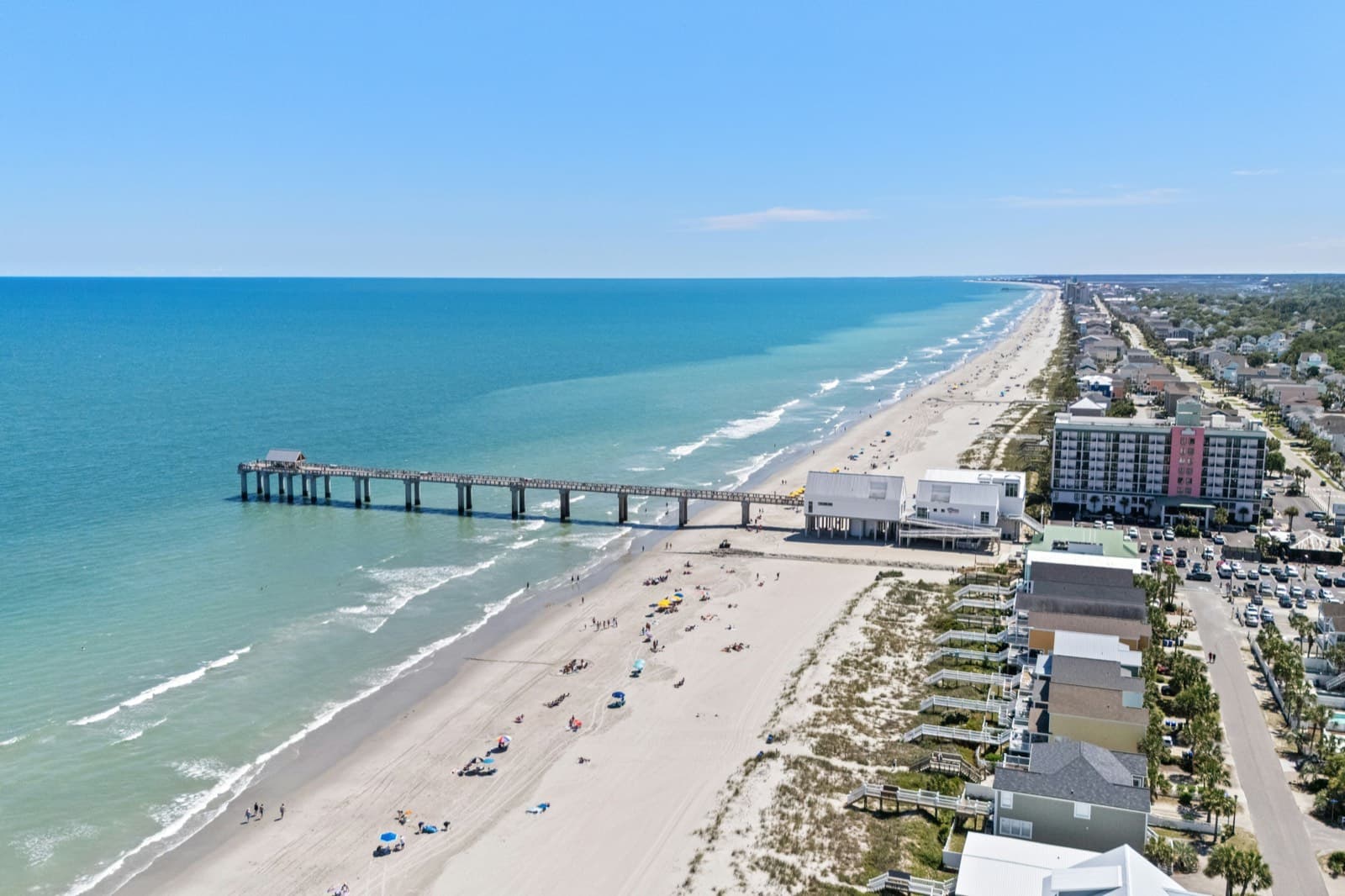
My office is on Surfside Drive, a few blocks back from the sand. So I hear one question about this stretch of coast more than any other — "what's the difference between Surfside and Garden City?" — and it almost always gets answered in terms of vibe. Quieter. Family-ish. A little more rental activity as you go south.
That's all true, and it's also the least useful version of the answer. The difference that actually shows up in your closing file is governmental: Surfside Beach is an incorporated town with its own council, ordinances, and police department. Garden City Beach is not a town at all. Everything else — who writes the beach rules, who you call about a short-term rental question, which set of ordinances governs your golf cart, which body can change any of it — follows from that one fact.
Here's what each one is, and what to check before you write an offer on either.
Surfside Beach Is a Town. Garden City Beach Is Not.
Surfside Beach is a municipality, and a long-established one — the town marked its 60th anniversary of incorporation on March 14, 2024, and timed the reopening of its rebuilt pier to the date, as the town's own pier history records. It has a mayor and council, a town hall, and its own municipal ordinances.
Garden City Beach is an unincorporated community. There's no town council and no set of municipal ordinances governing it. It's governed by Horry County, and Horry County says so plainly: the county's beach responsibilities run "South of the town limits of Surfside Beach through Garden City Beach to the Georgetown county line."
That county page contains the other geographic wrinkle worth knowing. Horry County notes that several of its beach services aren't available in North Myrtle Beach, Atlantic Beach, Briarcliff Acres, Myrtle Beach, Surfside Beach, "or the Georgetown County portion of Garden City." Garden City straddles the Horry–Georgetown county line. The county an address falls in is the county that assesses and bills its property taxes, and the two counties don't run identical millage or identical services.
So on a Garden City property, "which county?" is a real due diligence question, not a trivia question.
| Surfside Beach | Garden City Beach | |
|---|---|---|
| Status | Incorporated town (60th anniversary, March 2024) | Unincorporated |
| Governed by | Town council + Horry County | Horry County — and Georgetown County at the south end |
| Ordinances | Municipal ordinances on top of county | County ordinances |
| Who to call about beach rules | Town of Surfside Beach | Horry County (or Georgetown County, at the south end) |
Neither arrangement is better. A town gives you a smaller, closer body to petition when something on your street needs changing; unincorporated county living generally means one fewer layer of local rules. Buyers tend to have a strong preference once they understand which one they're buying into — they just rarely get told there's a choice being made. Ask the county assessor how a specific parcel is actually billed rather than assuming: what you owe depends on the taxing districts that parcel sits in, and those are worth confirming in writing.
The Pier, and What It Tells You About Surfside
If you want to understand why Surfside residents talk about their town the way they do, look at the pier.
The Town of Surfside Beach's own history of the structure is a fairly remarkable document. The pier was first built in 1953. It was destroyed by Hurricane Hazel in 1954. It was destroyed again by Hurricane Hugo in 1989 and wasn't rebuilt until March 1993. The town has owned and operated it since 2008. Hurricane Matthew hit on October 8, 2016 and took it out again. The rebuilt pier opened to the public on March 14, 2024 — deliberately timed to the town's 60th birthday.
A town that spends eight years and a considerable amount of public money putting its pier back, and then opens it on its own birthday, is telling you something about how it sees itself. Practically speaking, the pier is also the town's social center in a way a boardwalk district isn't. There's no nightlife strip here. That's the trade.
Garden City has its own pier and a more concentrated rental-and-visitor feel at the beachfront, thinning quickly into quiet residential streets behind it.
What the Market Actually Did Here
These are dated snapshots, not live figures — but they're real, local, and they're the numbers I'd want if I were deciding where to look.
Both sets are July 2026 figures, current as of August 10, 2026. Note the geography carefully: the 29575 figures cover Surfside Beach, and the 29576 figures cover Garden City and Murrells Inlet together — there is no Garden City–only breakdown, so the second column reflects both communities.
Single-family homes, July 2026
| Metric | Surfside Beach (29575) | Garden City / Murrells Inlet (29576) |
|---|---|---|
| Median sales price | $434,300 (+3.7% year over year) | $472,000 (−1.9%) |
| Closed sales | 44 (−22.8%) | 73 (+1.4%) |
| New listings | 62 (−18.4%) | 103 (+15.7%) |
| Days on market until sale | 136 (+19.3%) | 99 (−19.5%) |
| Percent of list price received | 94.4% | 95.0% |
| Inventory of homes for sale | 303 | 323 |
Townhouses and condos, July 2026
| Metric | Surfside Beach (29575) | Garden City / Murrells Inlet (29576) |
|---|---|---|
| Median sales price | $147,900 (−17.8%) | $304,348 (+35.3%) |
| Closed sales | 29 (+3.6%) | 52 (+79.3%) |
| Days on market until sale | 101 (−22.9%) | 156 (+27.9%) |
| Percent of list price received | 94.8% | 97.3% |
| Inventory of homes for sale | 179 | 211 |
Two cautions on reading that condo table: these figures don't account for sale concessions or down payment assistance, and percent changes on small monthly samples can look extreme. A 29-sale month and a 52-sale month are small samples. A median that moves 18% or 35% in a single month is usually telling you which units happened to close, not that values moved that much. Year-to-date figures are steadier: through July 2026, Surfside's single-family median was $422,000 (+4.6%) and its condo median $174,200 (−0.5%).
What I'd take from these two tables: single-family pricing in the 29576 corridor runs meaningfully above Surfside, and Surfside single-family homes sat longer this July than they did a year ago. Those are the conditions that make a well-priced listing matter and give a patient buyer some room.
Golf Carts: the Actual Rule
Half the reason people want to live within a few blocks of the sand here is the golf cart. It's worth knowing the real law, because it changed recently.
South Carolina repealed its old golf cart statute — former § 56-2-105 — effective May 22, 2025, under 2025 Act No. 64. The current rules live in S.C. Code § 56-2-90. Under that section:
- The owner obtains a permit decal and registration certificate from the DMV, with proof of ownership and liability insurance, for a five-dollar fee.
- Absent a local ordinance, operation is "only during daylight hours."
- Operation is restricted to "only within four miles of the address on the registration certificate."
- Carts may be operated "only on a highway where the speed limit is thirty-five miles per hour or less."
- Municipalities and counties may "by ordinance stipulate the hours, methods, and locations of golf cart operations."
That last provision is exactly where Surfside and Garden City diverge again. Surfside Beach is a municipality and can — and does — regulate golf carts by ordinance; Garden City is governed by county ordinance. Before you assume anything about cart use at a specific address, check the current ordinance with the Town of Surfside Beach or Horry County directly. These get amended, and an ordinance from a Facebook post two years ago isn't the rule.
The four-mile radius is the one that quietly shapes house hunting. It's measured from your registered address, and it's how far your cart can legally take you. On a compact beach town that's usually plenty. It's worth thinking about anyway.
Before You Write an Offer on Either One
The south Strand's specific risks aren't the ones inland buyers arrive expecting.
1. Pull the flood zone before anything else. Not "is it near the water" — the actual FEMA zone for the actual parcel. It determines whether your lender is legally required to make you carry flood insurance, and it varies street to street this close to the ocean and the creeks. I've written the full mechanics in understanding flood zones when buying here.
2. Get the wind and hail answer early. On this coast, wind can legally be carved out of a homeowners policy, and it comes with a second deductible most buyers have never seen. This is a feasibility question, not a closing formality — see how wind coverage works in coastal South Carolina.
3. Confirm the assessment ratio. South Carolina assesses an owner-occupied legal residence at 4% and non-owner-occupied property at 6%. On a beach property that may become a rental, that difference is large and it's the single most commonly missed money fact down here. The property tax guide walks through it. If you'll be 65 or older and a South Carolina resident, also ask the county about the homestead exemption: S.C. Code § 12-37-250 exempts "the first fifty thousand dollars of the fair market value of the dwelling place" from county, municipal, school, and special assessment real estate property taxes for a person who "has reached the age of sixty-five years" and "has been a resident of this State for at least one year."
4. Verify short-term rental rules for that specific address. Short-term rental legality on the Grand Strand is set municipality by municipality and changes. A Surfside address answers to town rules; a Garden City address answers to county rules; and an HOA can restrict rentals more tightly than either. Never take a listing's rental income claim as a statement of what's permitted — confirm with the governing municipality or county and read the HOA covenants.
5. On a condo, read the regime documents. Master insurance, reserves, and rental restrictions are where the real cost lives. That's a whole subject of its own: buying a condo here.
If you want the broader coastal checklist — dune lines, elevation, salt exposure, what to look at on a walkthrough — what to look for buying near the beach covers it.
Frequently Asked Questions
Is Garden City Beach part of Surfside Beach? No. Surfside Beach is an incorporated town with its own government. Garden City Beach is unincorporated and governed by the county — Horry County for most of it, and Georgetown County at the southern end, per Horry County's own beach-services notice.
Which one has lower property taxes? I won't give you a number, because the honest answer is parcel-specific: your bill depends on the taxing districts that particular parcel falls in, and on which county it's in. What I can tell you is that the factor that moves the bill most for buyers here isn't town versus county at all — it's the 4% owner-occupied versus 6% non-owner-occupied assessment ratio. Get the actual figures for the actual address from the county assessor before you rely on any of it.
Which is better for a rental investment? That depends entirely on what's permitted at the specific address, which is a municipal-or-county question plus an HOA question, and I won't generalize about it. Garden City's beachfront has more established visitor activity. That is not the same as saying a given property may legally be rented short-term. Verify before you underwrite.
How far can I actually drive a golf cart? Under § 56-2-90, within four miles of the address on the registration certificate, in daylight absent a local ordinance, on roads posted 35 mph or less — and subject to whatever the Town of Surfside Beach or Horry County has set by ordinance for that location.
Did the Surfside pier really reopen? Yes. The town's history page states the new pier opened to the public on March 14, 2024, at 5:30 pm, during the 60th birthday celebration of incorporation.
How does Surfside compare to the rest of the Strand? Best Places to Live on the Grand Strand sets all ten areas side by side. If you like the small-town scale but want shops you can walk to, compare it with The Market Common; if you want the same quiet with creek and marsh instead of open ocean, look at Murrells Inlet.
Come Walk Both of Them
Surfside and Garden City are ten minutes apart and genuinely different places to own a home. The fastest way to know which one is yours is to spend an afternoon in each — one on a weekday, one on a weekend, because they don't feel the same.
My office sits in the middle of Surfside, which means the legwork on a specific address is a short drive rather than a research project: I'll pull the flood zone for the parcel, find out what the town or the county actually permits there, and tell you what the block looks like in July as well as in February. Start with the Surfside Beach community guide, browse current listings, see what else is on the Strand, or get in touch and we'll go look. Selling instead? Start with a valuation.
Market figures in this article are July 2026 snapshots and will go out of date; ask for current numbers before pricing anything. This article explains how local government structure, state golf cart law, and South Carolina property tax rules work in general — it is not legal or tax advice. Confirm ordinances with the Town of Surfside Beach, Horry County, or Georgetown County, and confirm tax treatment with the county assessor or a South Carolina tax professional.
Thinking about making the move to the Grand Strand?
Whether you're relocating from up north or planning your retirement on the South Carolina coast, I'd love to help you get there. Follow me on Facebook for more local tips, search Grand Strand listings right here on my site, and join one of my Facebook groups built specifically for people making this move: